Let’s be honest, nothing ruins a perfectly good morning quite like stepping into a shower expecting warm comfort and getting a blast of ice-cold water instead. If your old water heater is struggling to keep up with your family’s routine, you’re probably weighing your replacement options right now. Here’s the thing—upgrading to a tankless water heater might just be the smartest move you make for your home this year.
## Why Are We Even Talking About This Right Now?
You know what? Most of us don’t give a second thought to the giant metal cylinder sitting in our garage until it starts leaking everywhere. We just expect hot water to be there when we turn the handle. But those traditional tank heaters operate on a pretty outdated concept. They just sit there, keeping 40 or 50 gallons of water piping hot 24 hours a day, seven days a week.
And honestly, keeping water hot while you’re fast asleep, or while you’re miles away at work, is a massive waste of energy. Plumbers call this phenomenon “standby heat loss.” Basically, your gas burner or electric heating element is constantly cycling on and off just to maintain the temperature inside the tank. You are literally paying to heat water nobody is using.
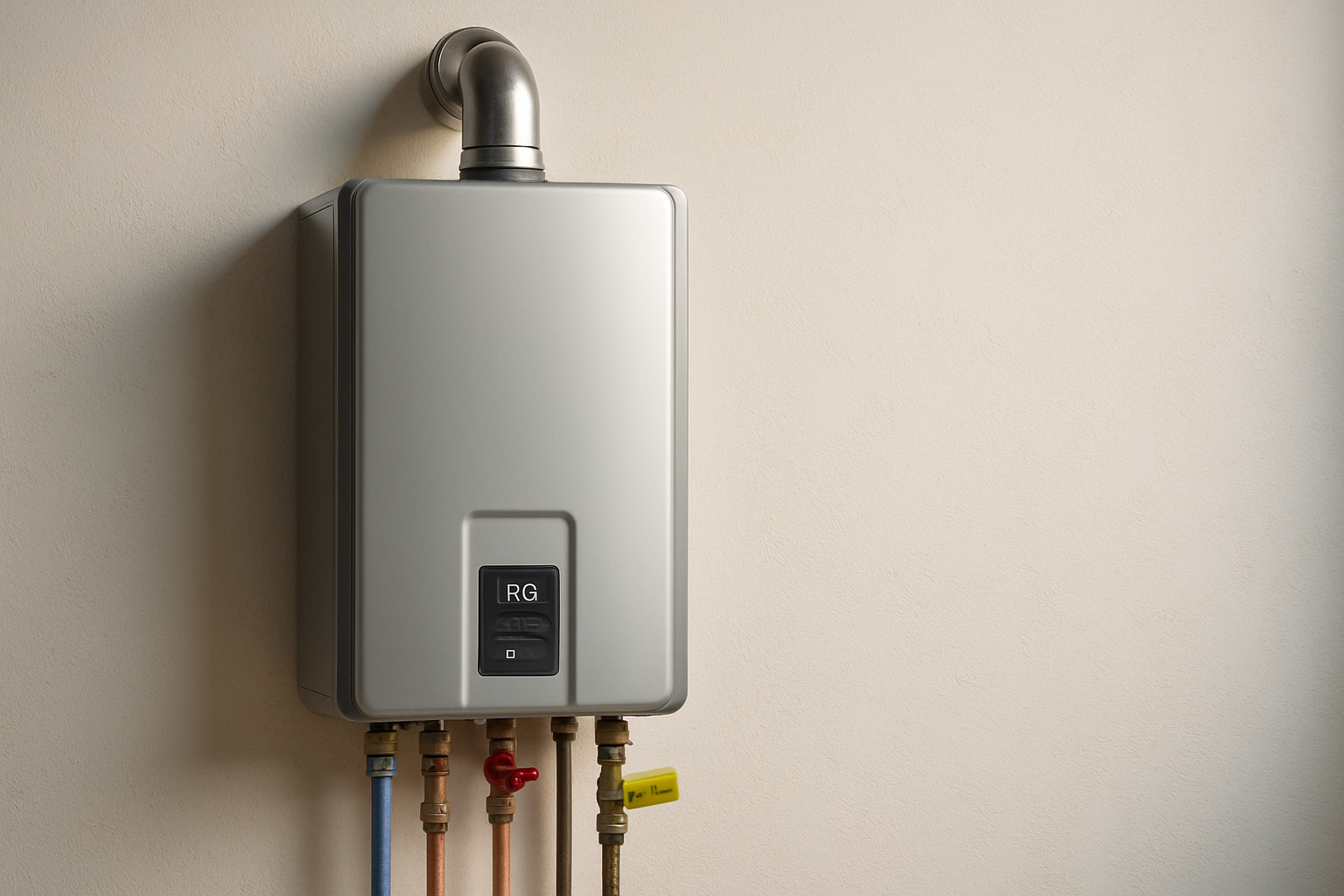
A tankless system changes the entire dynamic. Instead of storing water in a massive drum, it heats the water exactly when you turn on the tap. It’s completely on-demand.
### The Desert Reality Check
Before we go any further, let’s take a quick detour and talk about where we live. Living in Gilbert, AZ, means we deal with some seriously hard water. Calcium and magnesium love to wreck plumbing fixtures. It’s just a desert reality.
With a conventional tank, that thick mineral scale settles at the very bottom of the tank. It quietly eats away at the metal lining, eventually causing the whole thing to rust out from the inside. Tankless units still get scale buildup—I won’t lie to you about that—but here is the crucial difference. You can actually flush a tankless unit completely clean. By running a descaling solution through the system during a routine maintenance visit, you basically reset the heat exchanger to a factory-clean condition.
## Wait, How Does a Tankless System Actually Work?
Let me explain how the magic happens behind the scenes. When you turn your shower handle, a small turbine inside the unit—often called a flow sensor—detects the cold water moving. This simple movement triggers the internal computer to instantly fire up the burner. You can sometimes hear a quiet whoosh as the gas ignites.
Cold water then rushes through a seriously impressive piece of engineering known as a copper heat exchanger. As the water snakes its way through these tightly coiled pipes, it absorbs intense heat. Within seconds, the water reaching your faucet is exactly the temperature you set on the digital thermostat.
Once you turn the tap off, the system shuts down. No wasted energy. No standby heat loss. Just a smart, highly efficient process.
## The Big Showdown: Old School Tanks vs. Tankless
Sometimes it helps to see things side-by-side. Here is a quick breakdown of what you are really looking at when comparing these two common setups.
| Feature | Traditional Tank | Tankless Water Heater |
| :— | :— | :— |
| Average Lifespan | 8 to 12 years | 15 to 20+ years |
| Space Required | Massive floor footprint | Mounts neatly on the wall |
| Hot Water Supply | Runs out eventually | Literally endless |
## Honestly, Are They Worth the Upfront Cost?
Okay, let’s address the elephant in the room. Tankless water heaters cost more upfront than replacing a standard tank. They just do. The internal components are definitely more sophisticated. Plus, depending on your house, we sometimes have to upgrade your gas lines or adjust the exhaust venting to handle the higher BTUs (British Thermal Units) required to heat water so rapidly. You might be sitting there thinking, “Why on earth would I pay more now?”
Here’s the catch. You save money—you actually save real money—on your utility bills every single month. Because you aren’t paying for all that wasted standby heat, a high-efficiency tankless water heater operates using significantly less fuel.
Plus, remember that little table up above? A tankless unit lasts almost twice as long as a standard tank. You would likely buy and install two regular tanks in the exact same time it takes to wear out just one tankless system. So, over the long haul, the math definitely works out in your favor.
## The Not-So-Secret Perks You Probably Haven’t Thought About
Aside from the obvious energy savings, there are a few lifestyle upgrades that homeowners completely overlook until the system is finally on the wall.
* Endless hot water for everyone: Got a teenager who takes 45-minute showers? Or maybe you have visiting relatives fighting over bathroom time during the holidays? With a tankless system, the third person in the shower gets the exact same hot water as the first person. It just doesn’t run out.
* Claiming back your garage space: A traditional water heater is incredibly bulky. A tankless unit is about the size of a carry-on suitcase. It mounts flush right on the wall. You can finally put those holiday decorations, power tools, or golf clubs right where the old tank used to sit.
* Cleaner, fresher water: Think about it for a second. Traditional systems hold water in a dark, heated tank for years. Over time, sediment and rust build up inside the belly of the heater. With an on-demand system, your water is heated freshly as it passes through the pipes. You aren’t bathing in water that has been sitting in a rusty metal drum.
* No more catastrophic floods: When a 50-gallon tank ruptures, 50 gallons of water instantly floods your garage floor. Tankless systems don’t hold a massive reservoir of standing water, so that particular homeowner nightmare is completely off the table.
## Okay, But Is It Right for Your Gilbert Home?
I have to tell you, these systems are incredible, but they aren’t a one-size-fits-all magic pill. You really have to get the sizing right.
Plumbers measure a tankless heater’s capacity in GPM, which stands for Gallons Per Minute. Think of it like lanes on a highway. If you have three bathrooms and expect to run the dishwasher, the washing machine, and two showers at the exact same time, you need a highway with enough lanes. You need a unit with a high enough GPM rating to handle that heavy traffic. If you install a unit that’s far too small, your water pressure might drop, or the water simply won’t get fully hot when too many taps are open.
Also, you generally have to choose between gas and electric models. In our professional experience, gas-powered tankless heaters are usually the best route for whole-house applications in Arizona. They heat water much faster and handle larger household demands way better than electric models. Electric models are great for a single isolated bathroom, but they can struggle to keep up with a busy family.
But don’t stress too much about figuring out the GPM math or fuel requirements on your own. Honestly, that’s literally what we do every day.
## Let’s Wrap This Up (And Get You Some Hot Water)
Making big decisions about your home’s plumbing can definitely feel a little overwhelming. But honestly, if you plan on staying in your house for the foreseeable future, going tankless is a solid choice. You lower your utility bills, free up garage space, and finally get to enjoy completely endless hot showers.
It’s an investment in your home’s daily comfort and long-term value. So, if your current heater is making weird rumbling noises, or you’re just tired of shivering through the final five minutes of your morning routine, maybe it’s time to explore your options.
At Gilbert Plumbing Company, we have helped countless homeowners right here in Gilbert, AZ, make the switch. Let us take a look at your current plumbing setup. We will give you the straight facts on what it would take to upgrade your home to a more efficient system.
Give us a call today at 480-535-0728 or click below to Request a Free Quote. We’ll get your hot water situation sorted out fast.