You’re standing ankle-deep in lukewarm shower water, staring down at the drain, wondering how it got this bad again. Honestly, dealing with a stubborn clog is a rite of passage for homeowners, but it doesn’t mean you have to suffer through it. Let me walk you through the best tools for Drain Cleaning, so you can figure out what actually works and what just wastes your time.
Arizona Water and Your Pipes: A Stubborn Match
Before we talk about the tools themselves, we really need to talk about the water. Here in Gilbert, AZ, we have famously hard water. It’s just a fact of desert living. You know what that means, right? Calcium and magnesium deposits love to build up inside your plumbing.
It’s not just hair and soap scum causing your headaches. The mineral buildup literally shrinks the inside diameter of your pipes over time. So, a minor snag of hair that might wash away in another state suddenly gets glued to the sidewall of your pipe here. I mean, think about it like cholesterol in an artery. The narrower the pipe gets, the easier it is for everyday gunk to cause a massive, stubborn blockage.
That’s exactly why picking the right tool matters so much. You aren’t just pushing through last night’s dinner scraps; you’re fighting the environment itself.
The Trusty Plunger (And Why You Might Be Using the Wrong One)
I know, I know. A plunger seems way too basic to include on a list of the best tools. But here’s the thing: most folks are actually using the completely wrong plunger for the job.
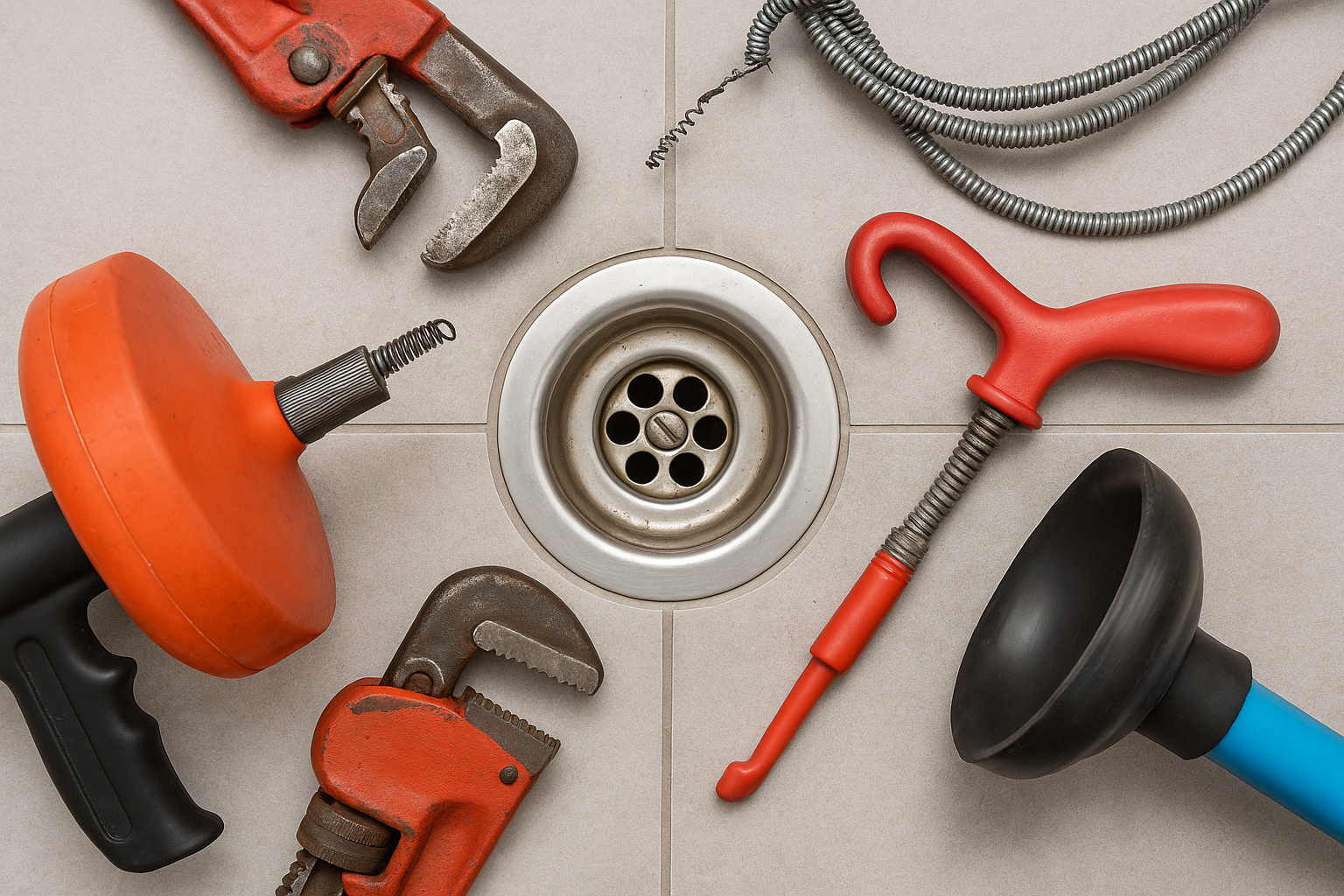
If you take a standard, flat-bottomed cup plunger and try to unclog a toilet, you’re going to have a bad time. Those flat ones are specifically designed for flat surfaces—think bathroom sinks or shower drains. For a toilet, you absolutely need a flange plunger. It has an extra rubber flap folded out from the bottom that creates an airtight seal inside the toilet bowl trap.
Without that tight seal, you’re just splashing water around. A good plunge relies on suction and pressure, pushing water back and forth to dislodge the blockage. Just make sure there’s enough water in the bowl or sink to submerge the rubber part completely. Air doesn’t push clogs; water does.
Getting Real With Drain Snakes
When a plunger won’t cut it, a plumbing snake, or hand auger, is usually your next line of defense. You can pick up a basic manual auger at any hardware store around town, and they are total lifesavers for minor, localized clogs.
Let me explain how they work. You feed a flexible metal cable down the drain until you feel resistance. Then, you tighten the thumbscrew and crank the handle. The corkscrew tip grabs onto whatever is blocking the way—usually a horrifying monster made of hair and soap.
- Manual Hand Augers: Perfect for sink and tub drains. Brands like Ridgid or Cobra make great, affordable options for homeowners.
- Closet Augers: These are specifically built for toilets. They have a curved metal tube at the base to protect your porcelain bowl from getting completely scratched up by the metal cable.
- Motorized Drain Augers: These attach to a power drill or have their own built-in motor. Honestly? I’d skip buying one of these for everyday home use. They can easily snap a pipe if you aren’t careful.
Using a snake takes a little patience. You can’t just shove it down there like a madman. It’s a gentle twisting motion that does the trick. You want to snag the clog, not compact it further down the line.
Liquid Cleaners: Friend or Foe?
Walk down the cleaning aisle at the grocery store, and you’ll see dozens of brightly colored bottles promising to dissolve clogs in seconds. Do yourself a favor and walk right past them.
Chemical drain cleaners are notoriously harsh. They rely on intense chemical reactions that generate a ton of heat. Sure, they might melt away a grease clog, but they also sit in your pipes, softening PVC and corroding older metal lines. If you have older plumbing, pouring a jug of chemical cleaner down the sink is like playing Russian roulette with your pipes.
Instead, I always recommend enzymatic drain cleaners. Products like Bio-Clean use naturally occurring bacteria and enzymes to digest organic waste.
They don’t work instantly. You pour them down the drain before bed, and the enzymes literally eat the grease, hair, and soap scum overnight. It’s a much safer, smarter way to keep your plumbing flowing freely without melting your system from the inside out.
The Unsung Hero: Drain Cameras
You might be wondering how a camera cleans a drain. Well, it doesn’t clean it, but it’s arguably the most important tool we have. How can you fix a problem if you don’t actually know what it is?
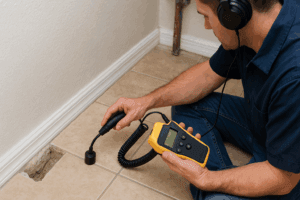
A fiber-optic drain camera takes all the guesswork out of plumbing. Instead of blindly shoving a snake down a pipe and hoping for the best, we send a high-definition camera down the line. It broadcasts a live video feed back to a monitor, letting us see exactly what’s going on.
Is it a toy your toddler flushed? Is it a massive root intrusion from that ficus tree in your front yard? Or is it just years of accumulated cooking grease? The camera tells us the truth. This prevents you from wasting money on the wrong solutions.
Bringing in the Heavy Artillery: Hydro Jetting
Sometimes, you’re dealing with something far worse than a clump of hair in the guest bathroom. Maybe your kitchen sink is completely backed up with years of congealed grease, or tree roots have invaded your main Sewer Line. That’s when the big guns come out.
Enter the hydro jetter.
Think of it as a super-powered pressure washer for the inside of your pipes. We use a specialized hose with a heavy-duty nozzle that blasts water at incredibly high pressures—often up to 4,000 PSI. The nozzle shoots water forward to break up the clog, while backward-facing jets scrub the pipe walls completely clean.
It doesn’t just poke a hole in the blockage like a snake does. Hydro Jetting Services scour the pipe, stripping away scale, grease, and those nasty hard water minerals we talked about earlier. Obviously, this isn’t a DIY tool. If you put 4,000 PSI of pressure into a weakened pipe without knowing what you are doing, you will absolutely blow the pipe apart. But as a professional service, it’s practically unmatched for serious, deep-rooted clogs.
An Ounce of Prevention (Or a Cheap Plastic Hair Catcher)
I would be slacking at my job if I didn’t mention the cheapest, most effective tool of all: the humble drain strainer.
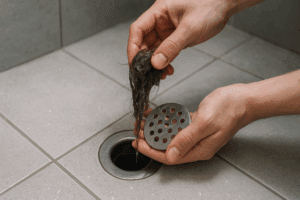
Seriously, you can save yourself so much money and frustration for less than ten bucks. A simple mesh or silicone hair catcher sitting over your shower drain stops the problem before it ever starts. It catches the hair, you throw the hair in the trash, and your pipes stay clear. It’s not glamorous, but it is wildly effective.
Prevention is always cheaper than a cure.
Figuring Out What to Use and When
It can be a little overwhelming figuring out which tool matches your specific disaster. Here is a quick breakdown to help you out the next time your water refuses to go down.
| Type of Clog | The Best Tool | DIY or Call a Pro? |
|---|---|---|
| Slow draining sink or shower | Enzymatic cleaner / Hand auger | DIY |
| Completely stopped toilet | Flange plunger / Closet auger | DIY |
| Whole house backing up / Grease blockages | Hydro Jetting | Call a Pro |
You really have to match the solution to the problem. Overcomplicating a simple sink clog is just going to cost you money, while underestimating a main sewer line backup is going to leave your yard in an absolute mess.
When to Throw in the Towel and Call the Pros
Look, we completely get it. Fixing things around the house feels great. There’s a real sense of accomplishment when you finally hear that “gurgle” and watch the water quickly drain away. But sometimes, a clog is just too stubborn, too deep, or too messy for a plunger and a plastic snake to handle.
If you’ve plunged until your arms ache, snaked until the cable won’t go any further, and the murky water is still stubbornly staring back at you, it’s time to stop. Forcing it could cause serious, expensive damage to your plumbing.
You don’t have to tackle this alone. At Gilbert Plumbing Company, we have the tools, the training, and the heavy-duty equipment to blast away even the worst blockages in Gilbert, AZ. From stubborn mineral scale to massive root intrusions, we’ve seen—and cleared—it all.
Ready to let the experts handle the dirty work?