You just opened your monthly water bill, and honestly, your jaw hit the floor. Or maybe you were walking barefoot through your kitchen and noticed a weird, warm spot on the tile that definitely was not there yesterday. Here’s the thing—you might be dealing with a dreaded Slab Leak right beneath your Gilbert home.
Wait, What Exactly Is a Slab Leak?
Let me explain. Most houses here in Arizona are built directly on top of a giant, solid slab of concrete. It is a reliable way to build a house, but underneath that massive block of cement is a hidden maze of plumbing pipes. These copper or PEX lines carry hot and cold water in and out of your house every single day.
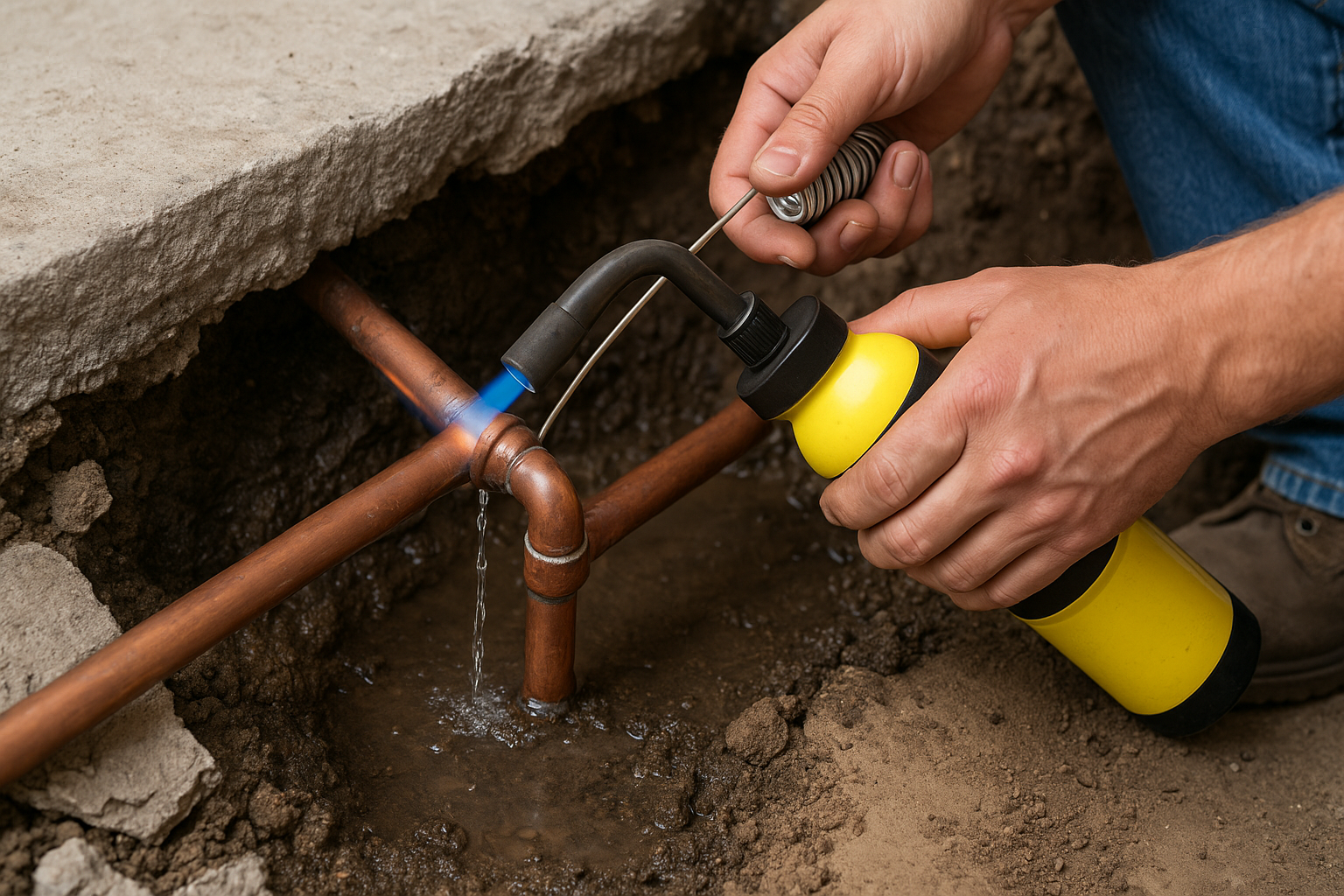
When one of those underground pipes develops a tiny pinhole leak or cracks from pressure, water starts pooling right under your foundation. It is sneaky. It is completely hidden from view. And you know what? It is basically every homeowner’s worst nightmare.
Hearing that you have water leaking under your foundation sounds like a financial disaster waiting to happen. People instantly picture jackhammers destroying their beautiful living room floors. But fixing a slab leak does not have to be a multi-month, dusty disaster anymore. We can actually handle these things pretty fast and easy nowadays. The technology we use has completely changed the game for slab leak repair.
How Do You Even Know You Have One?
Because these leaks happen under a thick layer of concrete, you cannot just look under the sink to spot a drip. You have to play detective. The signs are usually subtle at first, but they get worse over time. If you notice any of these weird issues, your plumbing might be trying to tell you something.
- A sudden, crazy spike in your water bill: You haven’t filled a swimming pool lately. You haven’t started watering the lawn twice a day. So why is your bill twice as high as last month?
- Warm spots on the floor: Especially if you have hard floors like tile or laminate. A warm floor feels pretty nice on a chilly desert morning, but a random hot spot usually means a hot water line broke underneath the concrete.
- The phantom sound of running water: You swear you hear water running through the pipes, but every single faucet in the house is turned off.
- A drop in water pressure: Your morning shower suddenly feels like a sad, weak drizzle because the water is escaping underground before it ever reaches the showerhead.
- Musty, damp smells: That funky odor creeping out from the baseboards is a huge red flag. Water sitting under your house will eventually breed mold.
Why Do Our Pipes Keep Breaking Anyway?
Let’s take a quick detour for a second. If you have lived in the East Valley for any amount of time, you already know about our famously hard water. It leaves that annoying white crust on your showerheads, right? Well, that same mineral-heavy water is constantly scraping against the inside of your pipes.
Over the years, that constant friction literally wears down the copper from the inside out. Combine that with the natural settling of our Arizona soil. We get those heavy summer monsoon rains, the ground swells up, and then it dries out and shrinks. This constant shifting pushes against your foundation. Eventually, the plumbing lines trapped in or under that concrete take a beating.
It is a little frustrating, I know. You buy a beautiful home, keep the AC running, trim the citrus trees, and then boom, the plumbing turns on you. But it happens all the time here in Gilbert.
The “Fast and Easy” Fixes: Myth vs. Reality
Like I mentioned earlier, people hear the phrase “slab leak” and panic. They think we are going to tear up their entire house. Years ago, that really was the only way. Plumbers had to guess where the leak was, smash through the floor, and dig in the dirt. You would have dust everywhere, noise for days, and a massive tile repair bill waiting for you when the plumber finally left.
Honestly, we don’t do it like that anymore unless it is absolutely necessary. First, we have to find the exact location of the leak. We use highly sensitive electronic acoustic equipment to listen for the escaping water. Think of it like a doctor using a stethoscope, but for your house. We also use thermal imaging cameras to see the heat from the water through the floor. We look a little bit like Ghostbusters walking through your hallway, but it works perfectly.
Once we know exactly where the water is escaping, we figure out the easiest, least destructive way to fix it. Here is a quick breakdown of how we handle underground pipe leaks today.
| Repair Method | How Long It Takes | Mess Factor |
|---|---|---|
| Direct Access | 1 to 3 Days | High (Requires breaking concrete) |
| Pipe Rerouting | 1 to 2 Days | Medium (Running new lines through walls) |
| Trenchless Epoxy | 1 Day | Low (Fixed from the inside out) |
Pipe Rerouting: Bypassing the Problem
Sometimes, the fastest and easiest way to fix a broken pipe under the floor is to just ignore it. Yes, you read that right. Instead of digging under the floor, we completely disconnect the broken pipe. We cap it off so no more water flows through it. Then, we run a brand new, flexible PEX water line up through your walls or your attic.
This method completely bypasses the whole mess underground. It is fast, it is surprisingly easy, and the best part? You do not have to rip up your expensive flooring.
Trenchless Pipe Lining: The Inside-Out Fix
Other times, we might use a trenchless repair method. This is where things get really cool. We access the broken pipe from a convenient spot outside or in the garage. We clean out the inside of the pipe with pressurized water. Then, we push a special epoxy resin inside. This resin coats the walls of the broken pipe and cures in place.
It hardens to form a brand new, solid pipe right inside the old, broken one. It seals up the pinhole leaks perfectly. It is practically magic, and there is absolutely zero digging required inside your living room.
Please Don’t Let a Small Drip Ruin Your Foundation
You might be tempted to wait this out. I totally get it; home repairs are not exactly fun to deal with. You might think, “It is just a little extra on the water bill, I will call someone next month.”
Waiting is the worst thing you can do for your house. A tiny, continuous leak will eventually wash away the dirt that supports your heavy concrete slab. When that dirt washes away, a void opens up under the house. The concrete eventually cracks under its own weight. And when the concrete cracks… well, you get the picture. Your foundation gets seriously compromised.
Addressing the problem the minute you notice a warm floor or a crazy water bill saves you thousands of dollars down the road. Catching it early keeps it a plumbing issue, rather than turning it into a massive structural repair issue.
Let’s Get Your Home Back to Normal
Dealing with plumbing problems is stressful, but you don’t have to figure it out alone. At Gilbert Plumbing Company, we handle these types of invisible leaks every single week. We know the local homes, we know the soil, and we know exactly how to fix the problem without turning your life upside down.
If you suspect water is running where it shouldn’t be, or if you just want peace of mind, let us come take a look. We use the best non-invasive detection tools in the business to find the problem fast.
Ready to get your plumbing back in working order? Do not wait for a small leak to become a massive foundation problem. Reach out to our Gilbert plumbing services team today.