You know that moment when you walk into your kitchen or backyard, catch a whiff of something awful, and instantly regret having a nose? In the blistering heat of a Gilbert, AZ summer, plumbing smells aren’t just a nuisance; they are an assault on the senses. And if you have a grease trap—whether you’re running a serious home kitchen, a backyard casita, or you’re on a specific septic setup—that smell is usually the first sign that you’ve ignored maintenance for too long.
Dealing with plumbing isn’t exactly everyone’s idea of a good Saturday afternoon. We get that. But ignoring a grease trap is like ignoring a check engine light that smells like rotten eggs. Eventually, things are going to stop working, and it’s going to cost way more to fix than it would have to maintain.
So, What Exactly Is a Grease Trap?
Let’s keep this simple. Think of a grease trap (or grease interceptor) as a bouncer for your plumbing system. Its entire job is to stop the troublemakers—Fats, Oils, and Grease (FOG)—from getting into the main Sewer Line or your septic field where they can cause absolute chaos.
Here’s the thing: water and grease don’t mix. You already know this. When you pour warm bacon grease down a sink (please don’t do that), it flows like a liquid. But the second it hits cool pipes? It turns into a solid, sticky mess.
The trap works by slowing down the flow of hot, greasy water. This allows the water to cool. As it cools, the grease floats to the top, and the heavier food solids sink to the bottom. The relatively clean water in the middle is then allowed to flow out under a baffle wall and into the sewer. It’s a simple system, really, but it needs your help to keep working.
The “Quarter Rule” and When to Clean
You might be wondering, “How often do I actually need to deal with this?”
There is a standard in the plumbing world called the 25% Rule or the 1/4 Rule. Basically, once your trap is 25% full of FOG (the floating stuff) and solids (the sinking stuff), it loses its effectiveness.
If the trap gets fuller than that, it can’t hold the water long enough for the separation to happen. That means grease starts escaping into your pipes. Once that happens, you aren’t just risking a clog in the trap; you’re risking a clog deep in your main line. And let me tell you, unclogging a main line is a lot more expensive than scooping out a trap.
Signs You’re Overdue for Maintenance
- The Smell: Honestly, if you smell it, you’re already late. As the FOG layer rots, it releases sulfuric gases. In Gilbert’s warm climate, this happens fast.
- Slow Drainage: If the sink draining into the trap is sluggish, the outlet is likely blocked.
- Gurgling Noises: This usually means air is trapped because the line is getting choked off.
Can You Clean It Yourself?
Technically? Yes. Should you? That depends on how strong your stomach is.
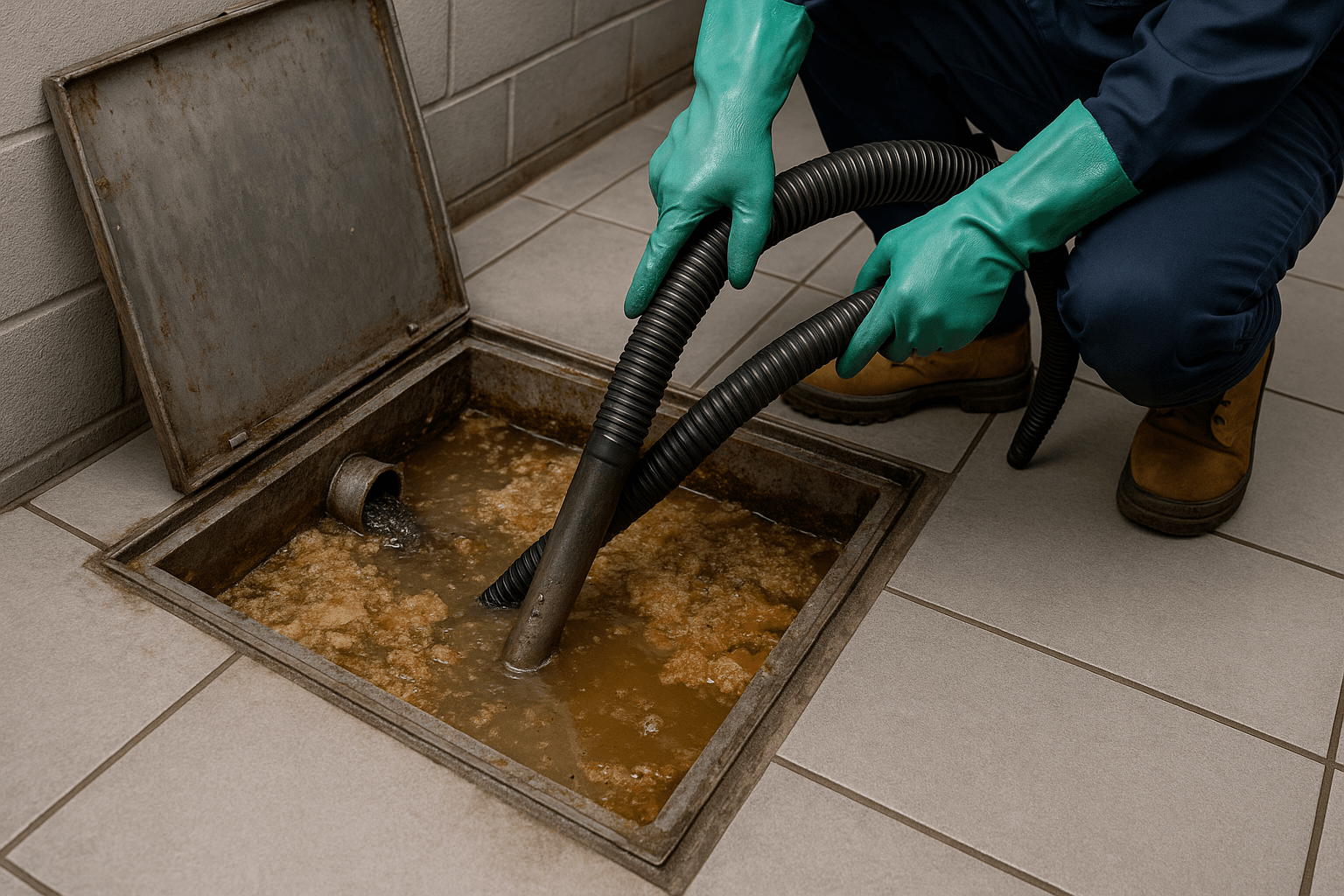
If you have a small, under-sink unit (common in some heavy-use residential setups or messy workshops), you can do it. If you have a massive inground interceptor, you definitely need a pumper truck. But for the smaller units, here is the dirty truth of how it’s done.
The DIY Breakdown
- Wait for the water to cool. You don’t want to handle boiling hot grease.
- Open the lid carefully. The gasket—the rubber seal around the edge—is fragile. Don’t rip it, or you’ll have smells leaking out forever.
- Measure the sludge. Use a stick or a specialized tool to see how deep the grease cap is.
- Remove the water. You can’t clean the solids if the tank is full of water. You might need a small pump or a bucket. Do not put this water down the drain!
- Scoop the gunk. You need to scrape the baffles, the sides, and the bottom. It’s going to look like gray peanut butter and smell like death.
- Check the flow. Ensure water can move freely through the unit once you’re done.
Sound fun? Probably not. It’s a messy, smelly job that requires you to dispose of the waste properly. You can’t just throw gallons of grease in your trash bin without risking a mess there, too.
The Do’s and Don’ts of Grease Management
Prevention is always cheaper than a cure. If you want to extend the life of your plumbing and go longer between cleanings, you have to change how you treat your sink.
Here is a quick breakdown of habits that save your pipes:
| DO This | DON’T Do This | Why It Matters |
|---|---|---|
| Scrape plates into the trash before washing. | Rinse food scraps down the drain. | Solids fill up the trap faster than anything else. |
| Wipe oily pans with a paper towel. | Pour cooking oil directly into the sink. | Oil floats and creates a thick “cap” in the trap immediately. |
| Use strainers in your sink drains. | Rely on the garbage disposal for everything. | Disposals grind food, but they don’t remove grease. They just make it easier to clog pipes. |
| Use cold water when running the disposal. | Use hot water to “wash down” grease. | Hot water melts grease temporarily, letting it bypass the trap and solidify in the sewer line later. |
The “Hot Water” Myth
Let me explain something that confuses a lot of homeowners. There is a common belief that running piping hot water with soap will “clear out” the grease.
In the short term? Sure, it melts the grease and moves it out of the sink. But remember what we said about the trap’s job? It needs to cool the water to separate the grease.
If you blast the trap with hot water, you emulsify the grease (mix it into the water) and flush it right out of the trap. It travels down your pipes, hits the cooler ground temperature of the sewer line, and hardens right there. That is how you get what we call a fatberg—a massive rock-hard blockage of grease and debris that requires high-pressure hydro-jetting to remove.
Why Professional Maintenance Makes Sense
Look, we know everyone loves to save a buck. DIY is great for painting a wall or fixing a fence. But grease traps are biological hazards. They contain bacteria, decaying food, and concentrated waste.
When you hire a pro, you aren’t just paying for someone else to hold the nose plug. You are paying for:
- Proper Disposal: We take the waste to certified facilities. You don’t have to worry about illegal dumping or leaking trash bags.
- Inspection: We check the baffles, the T-pipes, and the seals. A broken baffle means the trap is useless, and you wouldn’t know it just by looking at the goop.
- Documentation: If you are in a situation where the city or a landlord requires proof of maintenance, a receipt from a licensed plumber is your golden ticket.
Living in Gilbert, we deal with hard water scale buildup on top of the grease issues. A professional can spot when your lines are narrowing due to calcium deposits before it becomes a backup that floods your kitchen.
Keeping Your Gilbert Home Flowing
At the end of it all, your plumbing is the circulatory system of your home. You don’t think about it until it hurts. A neglected grease trap or poor grease habits can result in backups that ruin floors, cabinetry, and your peace of mind.
You don’t have to tackle the mess alone. Whether you need a one-time clean-out, a full system inspection, or just advice on how to upgrade your kitchen plumbing to handle the load, we are here to help. We’ve seen the worst of the worst, so nothing you have is going to shock us.
Don’t wait until the water stops draining or the smell becomes unbearable. Let’s get your plumbing healthy again.