Living in the East Valley, we tend to think the weather only has two settings: hot and “actually pretty nice.” But the truth is, your home’s plumbing system feels those seasonal shifts a lot more intensely than you might expect, even if we aren’t shoveling snow off the driveway. Taking a few proactive steps can save you a mountain of stress and a wallet full of cash down the road.
Winter: It Doesn’t Freeze Often, But When It Does…
Okay, I know what you’re thinking. “Winter? In Gilbert?” But hear me out. We usually get a handful of nights where the temperature dips below freezing, and that is exactly when things go wrong. Because we aren’t used to it, we get complacent. You know? We forget that copper and PEX pipes don’t care that it’s usually 70 degrees; they only care about that one night it hits 28.
The biggest culprit here is the hose bib—that outdoor faucet you hook your garden hose to.
Here’s the thing: if you leave a hose attached during a freeze, water gets trapped inside the spigot. Water expands when it freezes. Since it has nowhere to go, it splits the brass right inside the wall. You might not even notice until you turn the hose on in spring to wash the car, and suddenly your drywall is soggy.
Here’s a quick checklist for our “chilly” season:
- Disconnect all garden hoses. Seriously, go do it right now. It takes five seconds.
- Cover exposed pipes. If you have a pool pump or main water line coming out of the ground, throw a foam insulator or even an old towel over it on freeze warning nights.
- Check the attic. If your water heater is up there, make sure the insulation hasn’t shifted. An attic draft can freeze a pipe faster than you’d think.
Spring: The “Pre-Heat” Inspection
Once the orange blossoms start smelling amazing and the weather warms up, it’s time to look at what the winter might have hidden. Spring is really about preparing for the heavy lifting your plumbing will do in the summer. We use a lot more water when it gets hot—extra showers, filling pools, keeping the lawn alive.
This is the perfect time to check your water pressure.
In Arizona, municipal water pressure can fluctuate. If it’s too high (above 80 psi), it puts unnecessary strain on your fixtures. It’s like driving your car at 100 mph everywhere you go; eventually, something is going to blow a gasket. You can pick up a cheap gauge at the hardware store or have us check it.
Also, let’s talk about your water heater. Our water here in Gilbert is hard. Like, really hard. It’s full of minerals like calcium and magnesium. Over time, these minerals settle at the bottom of your water heater tank—we call this sediment buildup.
If you hear a popping or rumbling noise coming from your tank, that’s the sediment boiling. It’s essentially cooking a layer of rock at the bottom of your heater, which makes the unit work twice as hard to heat the water. Flushing it out in the spring helps it survive the summer demand.
Summer: The Danger Zone for Drains and Disposals
Summer is brutal. We know it, the pavement knows it, and your plumbing knows it. This is usually our busiest season at Gilbert Plumbing Company, and surprisingly, a lot of it has to do with the kitchen.
Kids are home from school, which means the bathroom gets used more, but the real victim is usually the garbage disposal. With summer BBQs, family gatherings, and kids making snacks, that poor disposal takes a beating.
People tend to treat the disposal like a trash can. It’s not. It’s really just for small scraps left on the plate. When you shove watermelon rinds, corn husks from the grill, or a pound of potato peels down there, you are asking for a clog.
Quick Guide to Disposal Safety:
| Safe to Grind | The “Please Don’t” List | Why It’s Bad |
|---|---|---|
| Small fruit scraps | Grease / Oil / Fat | Solidifies deeper in the pipe, causing major blockages. |
| Citrus rinds (smells nice!) | Coffee Grounds | Creates a thick sludge that packs like cement. |
| Ice cubes | Egg Shells | The membrane sticks to the blades; shells turn to grit. |
| Cooked meat scraps | Pasta / Rice | Expands with water and clogs the P-trap. |
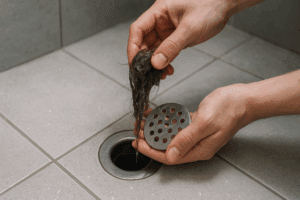
Another thing—roots. Trees are thirsty in July and August. If you have older trees near your Sewer Line, those roots will sniff out even the tiniest vapor leak in a pipe. They grow into the line, catch toilet paper, and before you know it, everything is backing up into the bathtub. It’s not a pretty sight.
Fall: Monsoon Aftermath and Recovery
After the dust storms and the microbursts settle down, Fall is the time for recovery. Monsoons can wreak havoc on roof vents. You know those little pipes sticking out of your roof? They allow air into the plumbing system so water can flow smoothly. If a bird builds a nest in there, or storm debris clogs it, your drains will start to gurgle and slow down.
Honestly, it’s weird how often we find tennis balls or leaves stuck in there.
This is also the time to look at your irrigation system. I know, technically irrigation is often considered “landscaping,” but it connects to your main water supply. A leak in your drip system that goes unnoticed for months because it’s buried under gravel can cost you hundreds of dollars.
Walk your yard. Look for wet spots that never dry out or plants that look suspiciously greener than their neighbors. That’s usually a sign of a sub-surface leak.
A Note on “flushable” Wipes
I’m going to go on a slight tangent here because this applies to every season, every day, forever. There is no such thing as a flushable wipe. I don’t care what the package says. I don’t care if it claims to be biodegradable.
In the plumbing world, we call them “job security.”
They do not dissolve like toilet paper. They get caught on the slightest imperfection in the pipe, snag other debris, and create massive balls of blockage. Just throw them in the trash. Your pipes (and your wallet) will thank you.
Year-Round Maintenance: Why It Matters
You know, most people ignore their plumbing until there is water pouring through the ceiling or the toilet won’t flush. It’s human nature. But treating your plumbing like your car—giving it a little tune-up now and then—extends the life of everything in your house.
From faucet aerators getting clogged with that hard water scale to running toilets that waste thousands of gallons a year, small things add up.
We love living in Gilbert. The community is great, the vibe is relaxed, but the environment is harsh on home systems. By keeping an eye on these seasonal changes, you can stop emergencies before they happen. You don’t want to be the person calling for a plumber on Thanksgiving morning because the potato peels killed the sink, right?
Let’s Keep Your Home Running Smoothly
If you aren’t sure how to flush your water heater, or if you suspect you might have a hidden leak driving up your water bill, don’t guess. We’ve been handling Gilbert’s unique plumbing quirks for years, and we’d be happy to take a look.
Plumbing doesn’t have to be a headache. Let us handle the dirty work so you can get back to enjoying your home.