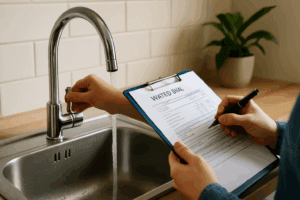
Imagine turning on your kitchen faucet to fill a glass of water, but instead of clear, refreshing liquid, you get something that looks—and smells—like it came from your garden sprinkler system. It sounds like a plumbing nightmare scenario, but without the right protections in place, it is a very real possibility. That keeps our water safe in Gilbert, AZ, and it starts with understanding how the flow of water actually works.
Wait, Water Can Go Backwards?
We usually think of plumbing as a one-way street. Water comes from the city supply, travels through the meter, runs through your pipes, and comes out of the showerhead or tap. Simple, right? But here’s the thing: water is lazy. It follows the path of least pressure. If the pressure in the city lines drops, or if the pressure in your home spikes, that water can decide to pull a U-turn.
This reversal is called backflow.
Think of it like sipping a soda through a straw. As long as you are sucking on the straw, the liquid comes up. But if you stop and blow air into it, the liquid is forced back into the cup. Now, imagine your house is the straw and the city water supply is the cup. If the flow reverses, any “gunk” sitting in your pipes—like soapy water from a dishwasher, chemicals from a boiler, or fertilizer from a lawn system—can get sucked back into the public water supply or your family’s drinking water.
Two Main Culprits: Backsiphonage and Backpressure
To really get why this happens, we have to look at the physics. You don’t need a degree to get this, just a basic idea of push and pull. There are generally two ways the water flow gets messed up.
Backsiphonage is usually the city’s fault, though not intentionally. It happens when there is a sudden drop in water pressure in the municipal lines. This vacuum effect can pull water from your home back into the main line. This might happen if:
- A fire hydrant is opened to fight a fire down the street.
- A water main breaks.
- The city is doing heavy maintenance on the pipes.
Backpressure, on the other hand, is often generated from the house side. This happens when a system in your home creates more pressure than the city supply is providing, pushing the water back against the flow. You see this a lot with:
- Booster pumps.
- Boilers.
- Interconnected water systems.
Why Should You Care? (Apart from the ‘Yuck’ Factor)
Honestly, nobody wants to drink dirty water. But it’s more than just a bad taste. In Gilbert, where we take pride in our landscaping, many homes have extensive irrigation systems. These systems often use fertilizers, pesticides, and other chemicals to keep the desert green.
If a backflow event happens and you don’t have a prevention device, those chemicals can be siphoned into the potable water supply. Suddenly, your morning coffee is brewed with a hint of Miracle-Gro. That is a serious health hazard.
Here is a quick breakdown of what could be lurking in cross-connections:
| Source | Potential Contaminant | Risk Level |
|---|---|---|
| Irrigation Systems | Fertilizers, pesticides, animal waste | High |
| Swimming Pools | Chlorine, acid, bacteria | High |
| Fire Sprinklers | Stagnant water, anti-freeze chemicals | Medium |
| Garden Hose | Cleaning chemicals, weed killer | Medium |
You know what? Even a simple garden hose left submerged in a bucket of soapy car-wash water can be a hazard if the pressure drops right at that moment.
The Guardian at the Gate: The Backflow Preventer
So, how do we stop this? Enter the backflow prevention assembly.
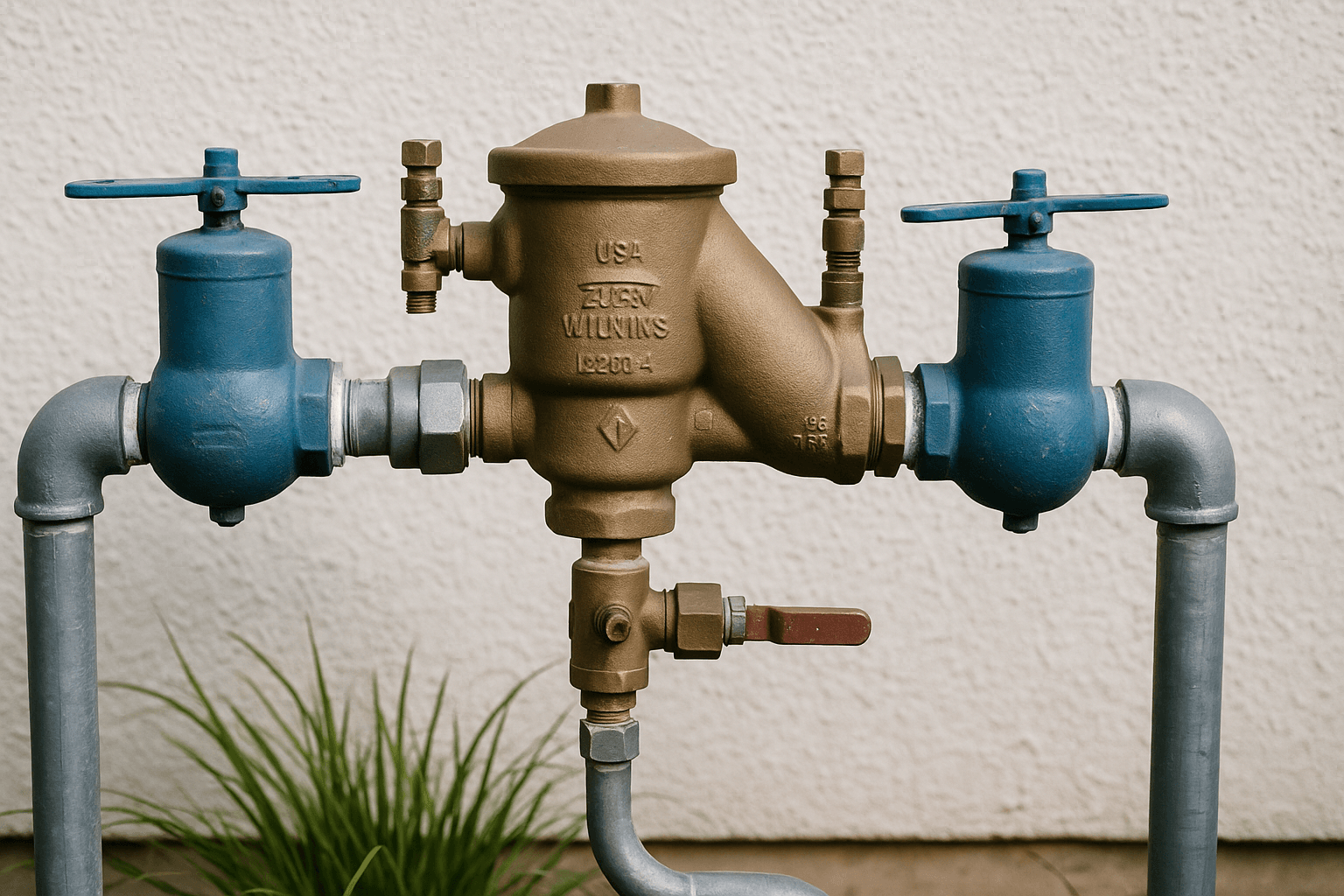
If you walk around the side of your house or look near the street, you might see a brass assembly of pipes and valves sticking out of the ground. It usually looks like an upside-down ‘U’ or a complex valve system. That’s your backflow preventer. It’s essentially a mechanical check valve that allows water to flow in only one direction. If the water tries to go backward, the valve snaps shut or vents the water out onto the ground to prevent contamination.
There are different types, but the most common for residential irrigation in our area is the Pressure Vacuum Breaker (PVB) or the Reduced Pressure Zone (RPZ) assembly.
- PVB: These are common for sprinkler systems. They rely on gravity and air pressure to close a check valve if water stops flowing properly.
- RPZ: These are the heavy hitters. They have two independent check valves and a relief valve. If one fails, the other catches it. These are used where the health risk is higher.
Gilbert Rules and the Annual Testing Ritual
Here is the part where paperwork comes in. Because clean water is a public safety issue, the City of Gilbert (and Arizona state law) takes this very seriously. They don’t just trust that these devices are working; they require proof.
Mechanical devices fail. Springs wear out, rubber seals crack, and debris gets stuck in the valves. Because these devices are often sitting out in the blazing Arizona sun, they take a beating. That is why annual backflow testing is mandatory for many properties, especially those with irrigation systems or pools.
You might get a letter in the mail from the city reminding you it’s time to test. It’s tempting to toss it in the “deal with it later” pile, but don’t. If you ignore it, they can actually shut off your water service.
The test isn’t something you can do yourself with a wrench and a YouTube video. It requires a certified backflow tester. They hook up a specialized gauge to the assembly to ensure the pressure differentials are correct and the valves are holding tight.
Signs Your System Might Be Acting Up
Ideally, you catch problems during that annual test. But things can break in between. How do you know if your backflow preventer is on the fritz?
- Leaking: A little discharge is normal for some types (like RPZs) when pressure fluctuates, but a constant steady stream of water implies a seal has failed or debris is stuck.
- Noises: If you hear odd humming or vibrating sounds coming from the pipes when the water is running, the internal springs might be shot.
- Discolored Water: If your tap water looks brown or yellow, stop drinking it immediately. This could be a sign the preventer failed and backflow has already occurred.
- Low Pressure: Sometimes, if the check valves get stuck halfway, it restricts water flow to your house or sprinklers.
Can I Fix This Myself?
I get it. You’re handy. You fixed the garbage disposal last week and replaced a ceiling fan. Why pay a pro?
Here is the reality: Backflow prevention is a regulated trade for a reason. It’s not just about stopping a leak; it’s about preventing mass contamination. If you dismantle the assembly and put it back together incorrectly, you might stop the external leak, but you might also disable the safety mechanism without realizing it.
Plus, you can’t certify the test yourself. The city won’t accept a note from you saying, “Yeah, it looks good.” They need the official certification number from a licensed tester.
When it comes to the safety of the water your family drinks, it’s better to let a professional handle the repairs and testing. It keeps you compliant with the city, and more importantly, it keeps the fertilizer on the lawn and out of your lemonade.
Keeping Your Water Safe
We often take clean water for granted. You turn the handle, and it’s there. But there is a complex system of pressure and mechanical valves working hard to ensure that what comes out of your tap is safe to drink. Backflow preventers are the unsung heroes of the plumbing world.
If you have received a letter from the City of Gilbert requiring a test, or if you notice your backflow assembly is leaking or looking a little worse for wear, don’t wait until it becomes an emergency.
Gilbert Plumbing Company is here to help with certified testing, repairs, and new installations. We know the local codes inside and out, and we make the process painless.
Call us today at 480-535-0728 or click below to get started.