Picture this: you wake up on a beautiful Saturday morning in Gilbert, grab your coffee, and look out the window, only to see a massive trench carved right through the middle of your pristine front yard. It’s a nightmare scenario, right? Fortunately, thanks to modern plumbing advancements, fixing a damaged Sewer Line doesn’t have to look like an archaeological dig anymore.
Wait, You Don’t Have to Dig Up My Whole Yard?
You know what? It used to be that if you had a sewer problem, you had a landscape problem. There was just no way around it. To get to the pipe, the dirt—and your driveway, your pavers, or that beautiful cactus garden you’ve spent years cultivating—had to move. But things have changed.
Trenchless pipe repair is exactly what it sounds like. It’s a method of repairing or replacing underground sewer pipes with minimal digging. Think of it less like open-heart surgery and more like laparoscopic surgery. We still need to get in there, but instead of opening up the patient (your yard) from stem to stern, we use small access points to do the heavy lifting from the inside out.
Honestly, it feels a bit like sci-fi compared to the old sledgehammer-and-shovel days. We can restore a pipe to better-than-new condition without turning your property into a construction zone. It preserves your hard work above ground while fixing the disaster underground.
So, How Does It Actually Work?
Here’s the thing: “Trenchless” is actually a blanket term for a few different techniques. It’s not just one magic wand. Depending on what’s going on with your pipes—whether they are cracked from shifting soil or invaded by aggressive tree roots—we use different approaches.
Most of the time, we are looking at two main players in the game: Pipe Lining and Pipe Bursting.
Cured-in-Place Pipe (CIPP) Lining
This is the most common method we use at Gilbert Plumbing Company. Imagine you have a straw that has a few cracks in it. If you could slide a slightly smaller, flexible straw inside it and then harden it, the liquid would flow through the new inner straw, right? That’s the basic concept.
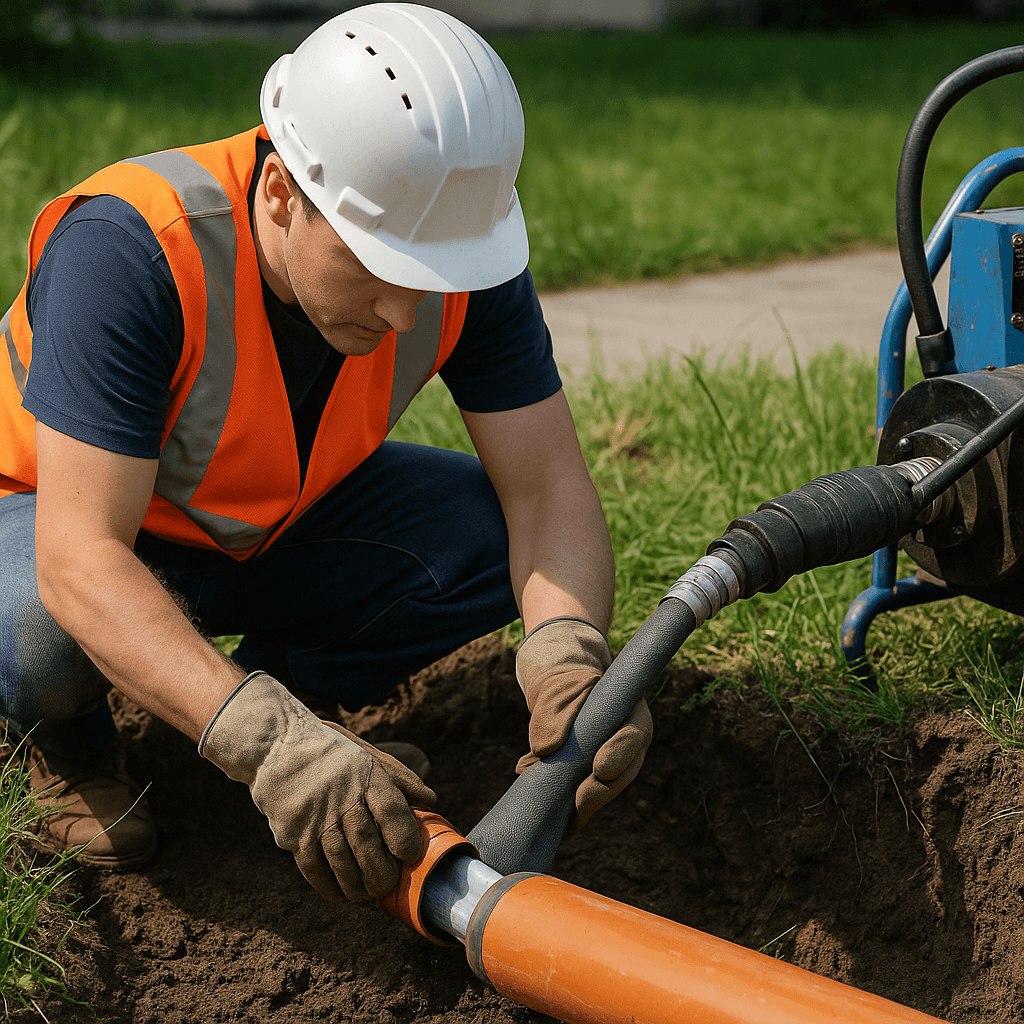
We take a flexible tube coated in a heavy-duty epoxy resin. We insert this “sleeve” into your existing damaged pipe. Once it’s in place, we inflate it like a long balloon. The pressure pushes the resin against the walls of the old pipe. After it cures (hardens), you are left with a brand-new, rock-hard pipe inside the old one. It’s seamless, jointless, and usually stronger than the original PVC or clay pipe.
Pipe Bursting
Sometimes, the old pipe is just too far gone. It’s collapsed or too brittle to line. That’s when we bring in the heavy artillery.
Pipe bursting involves pulling a steel bursting head through the old pipe. As this steel head moves through, it physically shatters the old pipe outward into the surrounding soil while simultaneously pulling a brand-new HDPE (High-Density Polyethylene) pipe into place behind it. It’s out with the old, in with the new, all in one motion.
Why Gilbert Homeowners Are Loving This
Let’s talk about where we live for a second. In Gilbert, we deal with some unique soil conditions. We have that hard-packed caliche clay that can be a nightmare to dig through, and we also have shifting soils that wreak havoc on foundations and sewer lines.
When you have to dig a traditional trench here, it is loud, it is dusty, and it takes forever. But the real reason people are switching to trenchless isn’t just about the plumbing; it’s about the math.
If you tear up your driveway to fix a pipe, you have to pay the plumber. Then, you have to pay the concrete guy to pour a new driveway. Then you have to pay the landscaper to fix the irrigation lines the backhoe ripped out. It adds up fast. With trenchless, you bypass those “restoration costs.”
Here are the big wins:
- Time Savings: Traditional repairs can take days or even a week. Trenchless jobs are often done in a single day.
- Less Mess: No mountains of dirt sitting on your lawn.
- Longevity: The materials we use for lining and bursting are rated to last roughly 50 years. That’s a long time not to worry about your sewer.
Let’s Talk Money: Is It More Expensive?
This is the question everyone wants to ask but hesitates to. Is this space-age technology going to cost an arm and a leg?
Here is the honest truth: The upfront cost of trenchless repair can sometimes be higher than traditional excavation because the equipment and materials are more specialized. The epoxy resins and hydraulic bursting gear aren’t cheap.
However, that’s looking at the price tag in a vacuum. You have to look at the total cost of the project.
| Cost Factor | Traditional Excavation | Trenchless Repair |
|---|---|---|
| Plumbing Labor | High (lots of digging hours) | Lower (tech-focused) |
| Material Cost | Low (standard PVC) | Higher (specialized resin/HDPE) |
| Landscape Restoration | High (replanting, sod, pavers) | Minimal (small access pits) |
| Hardscape Repair | High (concrete, driveways) | None to Minimal |
| Total disruption | Days to Weeks | Usually 1 Day |
When you factor in that you don’t have to repave your driveway or replant that mature Mesquite tree, trenchless often comes out cheaper in the long run. It’s about value, not just the sticker price.
Is Trenchless Right for Every Situation?
I wish I could say yes. It would make our lives easier, too. But there are times when trenchless just isn’t the right tool for the job.
If a pipe has completely collapsed—like, it’s pancaked flat—there is no way to insert a liner or pull a bursting head through it. You need a path to follow. In those cases, we have to grab the shovels. Also, if the pipe has a severe “belly” (a sag where water collects and doesn’t drain), lining it will just create a smooth, new belly. It won’t fix the slope issue.
This is why we always start with a sewer camera inspection. We run a camera down the line to see exactly what we are dealing with. It’s like an X-ray for your home’s plumbing. We aren’t guessing; we’re diagnosing.
The Environmental Angle (Because It Matters)
We don’t talk about this enough, but trenchless is also the greener option. When we dig up old pipes, especially those old clay or cast iron ones, they often end up in a landfill. Plus, the heavy machinery used for excavation burns a lot of diesel fuel.
Trenchless methods repurpose the existing hole in the ground. The epoxy liner essentially recycles the structure of the old pipe to create the new one. Less waste, fewer emissions, and less disruption to the local ecosystem (even if that ecosystem is just the lizards living in your front yard).
Why You Need a Pro for This
Look, I love the DIY spirit. I know plenty of homeowners in Gilbert who can swap out a faucet or fix a running toilet. But trenchless sewer repair is not a weekend warrior project. You can’t rent this equipment at the local hardware store, and even if you could, the margin for error is slim.
If the liner isn’t calibrated correctly, or if the curing process is rushed, you can end up with a botched pipe that is harder to fix than the original problem. It requires specialized training and certification.
At Gilbert Plumbing Company, we have invested heavily in this technology because we believe it’s the best service we can offer our neighbors. We’ve seen the relief on a homeowner’s face when we tell them their patio doesn’t have to be demolished. That reaction never gets old.
We know the local codes, we know the soil, and we know how to get the job done without turning your life upside down. Plumbing issues are stressful enough without adding a landscaping renovation to your to-do list.
Ready to Fix Your Pipes Without the Mess?
If you are noticing slow drains, weird smells in the yard, or wet spots where it hasn’t rained, don’t panic. And definitely don’t assume the worst for your landscaping. You might be the perfect candidate for trenchless repair.
Let’s take a look at what’s going on down there. We can run a camera, show you the footage, and give you honest options—whether that’s trenchless or a traditional repair.