Living in the East Valley means putting up with intense summer heat and hard water, but there is an entirely different battle happening right under your front lawn. Honestly, thinking about your home’s wastewater system is probably the absolute last thing you want to do on a Saturday morning. But waiting until raw sewage backs up into your guest bathroom is a surefire way to ruin your weekend—and your budget.
Is Your Yard Trying to Tell You Something?
You know what? Most plumbing disasters do not just happen overnight. They actually give you plenty of warning signs, assuming you know what to look for. Your underground pipes are quietly trying to communicate that they are struggling. Let me explain.
When a single toilet gets clogged, you grab a plunger. That is just normal homeowner stuff. But when your entire plumbing system starts throwing a fit, you are looking at a much bigger problem. You might have a compromised main line if you notice a few of these strange behaviors happening around your property.
- Multiple slow drains: If your shower backs up while the washing machine is running, your main line is struggling to breathe. Water has nowhere else to go.
- Gurgling noises in the toilet: Do your plumbing fixtures sound like a percolating coffee pot? That gurgling means trapped air is trying to escape through the water seals in your house.
- Sewage odors: You should never smell sulfur or raw sewage in your backyard or inside your home. If you do, a pipe has definitely cracked somewhere.
- Random patches of lush grass: We live in the desert. If you suddenly have a shockingly green, fast-growing patch of grass in your front yard while the rest of the lawn looks thirsty, do not celebrate. That grass is likely feeding on an underground sewage leak.
- Soggy indentations: Puddles forming in your yard when it has not rained in weeks are a huge red flag.
If you are seeing two or more of these signs, ignoring them will only lead to a massive headache later. The mess is stressful, and the smell is even worse.
Age Matters: What Is Lurking Beneath?
Here is the thing about Sewer Line replacement. Sometimes, the pipe has just reached the end of its natural life. Homes built in Gilbert decades ago were constructed using materials that we simply do not use anymore. Materials break down. They corrode. They collapse.
If your home was built before the 1980s, you really need to be aware of what is buried out there. Modern homes usually use durable plastics, but older properties are a whole different story.
| Pipe Material | Expected Lifespan | Common Problems |
|---|---|---|
| Clay Pipes | 50 – 60 Years | Highly susceptible to tree roots; joints leak easily. |
| Cast Iron | 50 – 75 Years | Rusts from the inside out; creates rough edges that catch debris. |
| PVC / Plastic | 100+ Years | Very durable, but can warp or crack if the ground shifts significantly. |
Cast iron is particularly stubborn. It is incredibly heavy and durable on the outside, but over time, water channels a trench right through the bottom of the pipe. Plumbers call this “channeling.” Once the bottom rusts out, sewage leaks directly into the soil instead of making it to the city sewer main.
Clay pipes are even trickier. They were put together in short sections, leaving dozens of joints. And in Arizona, tree roots are absolutely desperate for water. They will squeeze into those tiny joints, feed on the moisture, and eventually shatter the clay entirely.
The Big Question: Repair or Replace?
I get asked this all the time. Can we just patch it? Sometimes, yes. But throwing money at a temporary patch on a failing system is like putting a brand-new tire on a car with a broken transmission. It just does not make financial sense long-term.
When we send a high-definition camera down your drain—a process called a video pipe inspection—we can see exactly what is going on.
If you have a minor crack in a relatively new PVC pipe, a targeted repair is totally fine. We fix the weak spot and you go back to your life. But if the camera reveals bellied pipes (where the pipe has sunk and created a stagnant pool of waste) or severe root intrusion tearing apart an old clay line, a spot repair is a waste of your money. The pipe will just fail ten feet further down the line next month.
Replacing the whole line guarantees peace of mind. You will not have to hold your breath every time you flush the toilet, wondering if today is the day the system finally quits.
How Trenchless Technology Changed the Game
Now, I know exactly what you are picturing. You hear the words “replace sewer line” and you instantly imagine a backhoe tearing up your beautiful driveway, destroying your favorite rose bushes, and leaving your front yard looking like a construction zone for three weeks.
That used to be the reality. Honestly, it was a nightmare for homeowners.
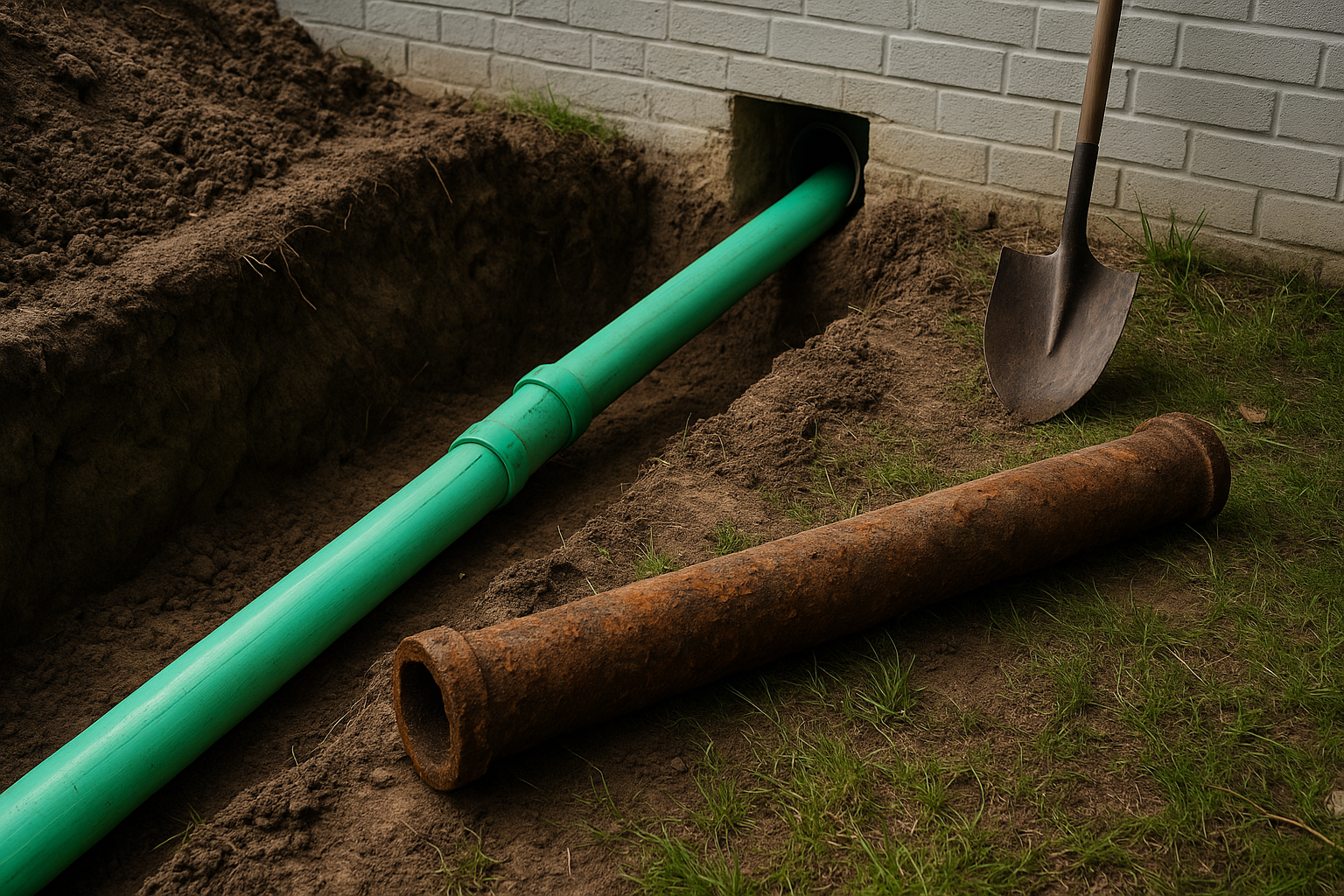
Thankfully, modern plumbing has evolved. We now use trenchless sewer repair techniques that save your landscaping and your sanity. Instead of digging a massive trench from your foundation all the way to the street, we usually only need to dig two small access holes.
There are two main ways we do this:
- Pipe Bursting: We pull a heavy, cone-shaped steel head through your old pipe. This head completely shatters the old, broken pipe while simultaneously dragging a brand-new, seamless high-density polyethylene (HDPE) pipe into place.
- CIPP (Cured-In-Place Pipe): Think of this as building a pipe inside a pipe. We insert a flexible, resin-soaked liner into your existing line. Once it is inflated and cures, it hardens into a solid, structurally sound pipe. It seals up all the cracks and gaps without us having to remove the old pipe at all.
Trenchless methods are faster, cleaner, and often more affordable because you do not have to pay a landscaping crew to fix your yard afterward. It really is a game-changer.
Why Our Gilbert Soil Makes It Tricky
Let us take a quick detour and talk about dirt. You might not think dirt matters, but our local soil conditions play a huge role in the health of your underground plumbing.
Here in Gilbert, we deal with a lot of caliche. If you have ever tried to plant a tree in your yard, you know exactly what caliche is. It is a layer of soil that is essentially natural concrete. It is incredibly hard.
When homes settle over time, or when the ground expands and contracts during our extreme summer heat, that hard soil puts immense pressure on your plumbing. This hydrostatic pressure can literally crush older, brittle pipes.
And remember those thirsty tree roots we talked about? Ficus trees, mesquites, and Palo Verdes have aggressive, sprawling root systems. They can smell the humidity escaping from a tiny hairline crack in a sewer pipe from several yards away. Once they find it, they wrap around the pipe and force their way inside.
Working with plumbing professionals who actually understand local Gilbert soil means you get a replacement installed correctly the first time. We know how to bed the new pipes properly so the hard Arizona earth does not crack them again.
Ready to Stop Stressing Over Your Drains?
You should not have to cross your fingers every time you run the dishwasher. A healthy plumbing system is something you should never even have to think about.
If you are dealing with constant clogs, weird smells, or an inexplicably soggy lawn, it is time to find out what is really going on down there. We can take a look with our cameras, give you an honest assessment, and help you decide the most cost-effective path forward. No guessing, no high-pressure tactics. Just clear answers.
Let the experts at Gilbert Plumbing Company get your home flowing smoothly again.