Is there anything worse than stepping into the shower, expecting a warm embrace, and getting hit with arctic runoff instead? It’s enough to ruin your whole morning before the coffee even brews. When your water heater decides to quit, you don’t want excuses or a lesson in thermodynamics—you just want hot water fast.
So, why is the water ice cold?
Honestly, panic is usually the first reaction. You immediately start calculating the cost of a new unit or wondering if you’ll have to boil water on the stove like it’s the 1800s. But before you spiral, let’s look at the simple stuff. Sometimes the problem isn’t a catastrophe; it’s just a glitch.
If you have a gas water heater, the culprit is often the pilot light. It’s a tiny flame that ignites the gas to heat the water. If that goes out—maybe from a draft or a hiccup in the gas supply—you get zero heat. You can check the little window at the bottom of the unit. No blue flame? That’s your issue.
On the flip side, if you’re running an electric water heater, check your breaker panel. These units pull a lot of power. Sometimes, a power surge or just a random trip can cut the juice. Flip the breaker off and back on. If it trips again immediately, though, don’t force it. That means you’ve got a bigger electrical short, and forcing it is a fire hazard.
What’s that banging sound?
You know what? Houses make noises. Floors creak, wind howls. But if your water heater sounds like there’s a popcorn machine running inside the tank, that is not a ghost. It’s sediment.
Here in Gilbert, AZ, we deal with some seriously hard water. It’s full of minerals like calcium and magnesium. Over time, those minerals settle at the bottom of your tank and turn into a layer of rock-hard gunk.
When the burner turns on to heat the water, it has to heat through that layer of sediment first. The water trapped underneath the sediment boils and bubbles up, causing those popping, banging, or rumbling sounds. Pros call this “kettling.”
Here is the thing: it’s not just annoying noise. That layer of sediment acts like insulation, keeping the heat away from the water. This overheats the metal bottom of the tank, which creates stress cracks. Eventually, those cracks lead to leaks. So, if your heater is singing the song of its people, it’s crying for help.
Puddles are never a good sign
If you walk into the garage or utility closet and your socks get wet, your stomach probably drops. Leaks are tricky because they can come from a few different spots, and the location tells you how bad the damage is.
Where is the water coming from?
- The Top: If water is pooling on top, it could just be a loose pipe fitting or a failure at the cold water inlet or hot water outlet. This is usually a quick fix.
- The Bottom: This is the one we worry about. If water is seeping out from under the tank, the inner lining has likely corroded and cracked. Once the tank itself is compromised, there is no patching it. You are looking at a replacement.
- The Relief Valve: There is a pipe running down the side of the tank connected to a valve (the Temperature and Pressure Relief Valve). If water is dripping from there, the valve might be stuck, or the pressure in the tank is too high. This is a safety mechanism doing its job, but it needs attention.
Important: If you see a major leak, go to the shut-off valve on the cold water pipe above the unit and turn it clockwise. Stop the flow before it ruins your drywall.
The Gilbert water factor
I mentioned the hard water earlier, but let me explain why it matters so much here. In other parts of the country, a water heater might last 12 to 15 years without breaking a sweat. In Gilbert? The water is tough on plumbing.
Without regular maintenance, the life expectancy of a standard tank drops. The minerals eat away at the anode rod—that’s a sacrificial metal stick inside the tank designed to attract corrosion so the tank walls don’t rust. Once that rod is gone, the water starts eating the tank.
If you haven’t checked your anode rod in the last three years, you are basically driving a car without changing the oil. It’s running on borrowed time.
Repair or Replace: The Big Question
This is the part everyone dreads. Do you throw money at a repair, or do you bite the bullet and buy a new one? It’s not always a clear-cut answer, but there are some general rules of thumb we use in the trade.
If your unit is under six years old, it’s almost always worth fixing. If it’s over ten years old and starts leaking, you’re better off replacing it. Technology has improved, and newer models are way more energy-efficient.
Here is a quick breakdown to help you visualize it:
| Scenario | Recommendation | Why? |
|---|---|---|
| Broken Thermostat | Repair | Inexpensive part, easy to swap out. |
| Leaking Tank Body | Replace | The structural integrity is gone; patches won’t hold. |
| Pilot Light Won’t Stay Lit | Repair | Usually a thermocouple issue; relatively cheap fix. |
| Unit is 12+ Years Old | Replace | It’s near end-of-life; repairs are just band-aids. |
| Running out of Hot Water Fast | Repair/Flush | Could be a broken dip tube or sediment buildup. |
Tankless vs. Traditional: Is it time to switch?
Since we are talking about fixing things fast, you might be wondering if you should just upgrade entirely. You’ve probably heard people raving about tankless water heaters. They are great, but they are different beasts.
A traditional tank keeps 40 or 50 gallons of water hot 24/7, waiting for you to turn the tap. It uses energy even when you are sleeping. A tankless unit heats water on demand. You turn the tap, the machine fires up, and you get endless hot water.
Pros of Tankless:
- You never run out of hot water (great for big families).
- They take up way less space (mounted on the wall).
- They last longer (up to 20 years).
Cons of Tankless:
- Higher upfront cost.
- Might require upgrading your gas line or electrical panel.
If you need a fix today because you have zero hot water, swapping to tankless might take a bit longer to install than just swapping out a standard tank. But if you are tired of timing your showers around the dishwasher, it’s worth thinking about.
Can I tackle this myself?
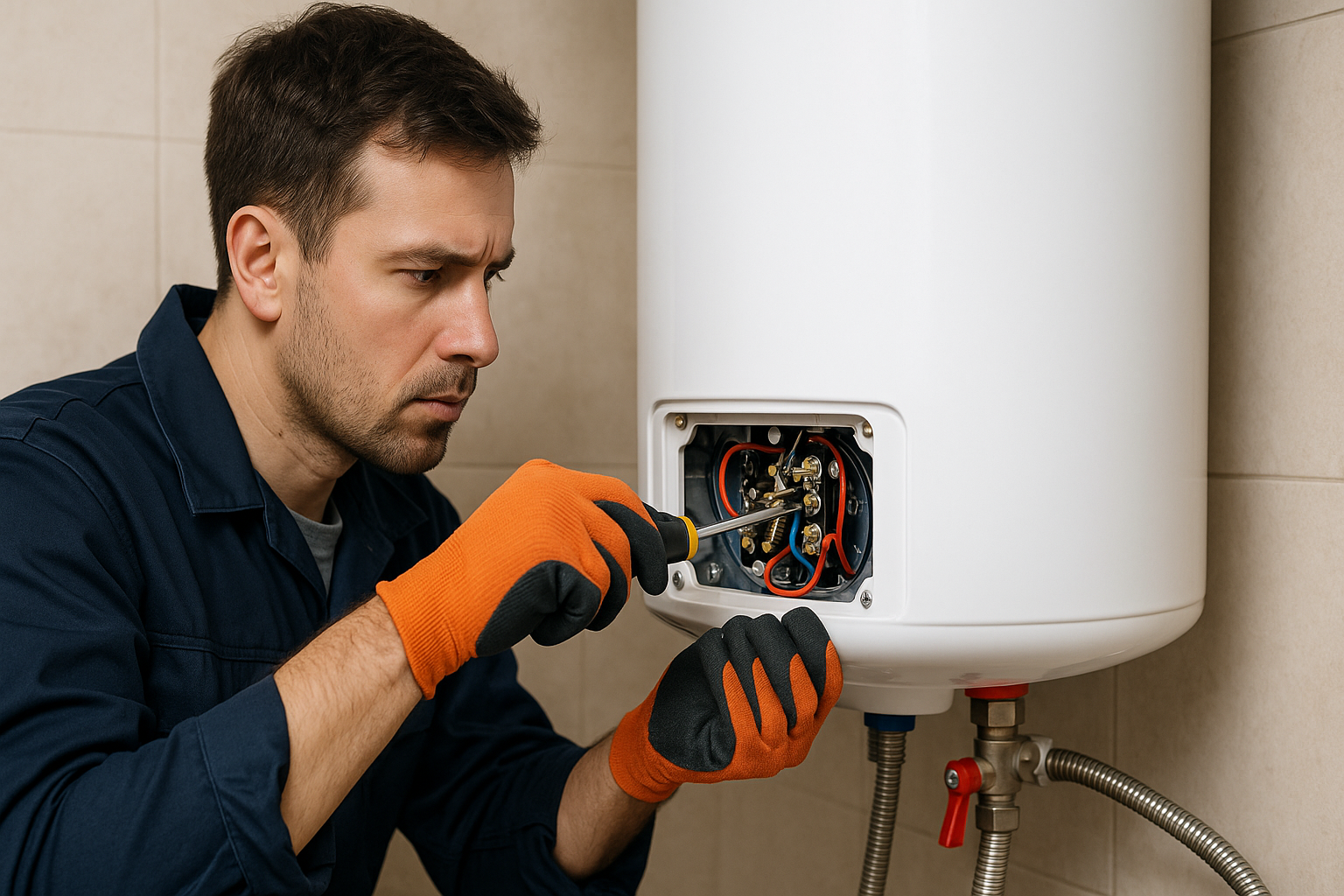
Look, I am all for DIY projects. Painting a room? Go for it. building a bookshelf? Have fun. But water heaters combine three things that don’t play nice together: gas, electricity, and water under pressure.
If you are just re-lighting a pilot light, that is fine. The instructions are usually printed right on the side of the tank. But if you start messing with gas lines or trying to replace a heating element without knowing exactly how to drain and test the voltage, things can go south quickly.
Gas leaks are invisible and silent until they aren’t. And a pressurized tank that isn’t vented properly can actually explode. Not a little “pop,” but a “take out the garage wall” kind of explosion.
Sometimes, saving a few bucks isn’t worth the risk. Plus, did you know that improper installation can void the manufacturer’s warranty? Then you’re really out of luck.
Keeping the hot water flowing
You want to avoid this panic in the future, right? The best way to fix a water heater is to stop it from breaking in the first place.
Once a year, you should flush the tank. You hook a garden hose up to the drain valve at the bottom and let the water run out into the driveway until it runs clear. This gets rid of that nasty sediment we talked about. It keeps the unit running efficiently and stops the “kettling” noise before it starts.
Also, keep an eye on the area around the heater. Don’t pile boxes or old clothes right up against it. Gas units need airflow to burn properly. Give it some breathing room.
Don’t settle for cold showers
A broken water heater disrupts everything. You can’t clean dishes, you can’t do laundry, and you certainly can’t enjoy a shower. It stops your household in its tracks.
Whether it’s a simple thermocouple fix, a sediment flush, or a full replacement, you need someone who knows the specific challenges of Gilbert plumbing. You need straight answers and a solution that lasts, not just a quick patch job that fails in a month.
We can help you figure out if your unit is salvageable or if it’s time to upgrade. We handle the dirty work so you can get back to your warm showers.
Contact Gilbert Plumbing Company today.