Living in the Arizona desert means watching the water meter spin faster than a tumbleweed in a monsoon storm, doesn’t it? It is genuinely frustrating opening that utility envelope only to see a number that makes your jaw drop, especially when you feel like your usage hasn’t changed. But don’t worry, because slashing those costs is often easier (and less painful) than you might think.
Is your wallet leaking without you knowing?
Here’s the thing about water bills in Gilbert: they rarely spike for no reason. Usually, there is a culprit, and half the time, it’s hiding in plain sight. We aren’t just talking about taking shorter showers—though that helps—we are talking about structural inefficiencies in your home’s plumbing system.
You see, water conservation isn’t just an environmental buzzword; it is a financial strategy. When you reduce your water footprint, you are essentially giving yourself a raise.
Most homeowners assume their plumbing is sealed tight unless they see a puddle on the floor. Honestly? That is rarely the case. Small, silent leaks or outdated fixtures can bleed your bank account dry. It’s like having a tiny hole in your pocket where nickels fall out every hour. You might not notice the missing change immediately, but give it a month, and you’re suddenly short on cash.
The sound of money going down the drain
Let’s talk about the porcelain throne. Your toilet is likely the biggest water consumer inside your house, accounting for nearly 30% of indoor water use. If you hear a faint hissing sound or if the water seems to run randomly long after you’ve flushed, you have a running toilet.
Usually, this is caused by a worn-out flapper. That’s the rubber seal at the bottom of the tank. In our hard Arizona water, rubber deteriorates faster than you’d expect. A warped flapper lets water seep from the tank to the bowl continuously.
It seems minor, right? Well, a running toilet can waste up to 200 gallons a day. That is 6,000 gallons a month.
Another silent thief is the dripping faucet. It’s easy to ignore a slow drip, but the math is brutal. One drip per second adds up to over 3,000 gallons per year. That’s enough water to take about 180 showers! Fixing these leaks usually involves replacing a simple washer or cartridge—a ten-minute job that stops the financial bleeding instantly.
Let’s talk about the backyard jungle
Living in Gilbert, we love our backyards. But keeping grass green when it’s 110 degrees outside is a battle against nature, and nature usually wins. Outdoor water use can account for up to 70% of a home’s total water consumption here.
If you have an automated irrigation system, when was the last time you actually looked at the timer?
Many folks set their sprinkler timers once and forget them. They end up watering the lawn during a rainstorm or letting the sprinklers run while the kids are sliding around on a slip-n-slide. Modern smart irrigation controllers are a game-changer here. They use local weather data to adjust watering schedules automatically.
Also, check your sprinkler heads. Are you watering the sidewalk? The driveway? Your neighbor’s car? Adjusting the spray pattern ensures water lands on the roots, not the concrete. Concrete doesn’t grow, no matter how much you water it.
Here is a quick look at where water usually goes to waste outdoors versus how to fix it:
| Water Waster | The Problem | The Fix |
|---|---|---|
| Broken Sprinkler Head | Shoots a geyser into the air, wasting gallons per minute. | Replace the head immediately; check for cracks monthly. |
| Evaporation | Watering during the heat of the day causes water to vanish before hitting roots. | Schedule irrigation for early morning (before 5 AM). |
| Pool Leaks | Often mistaken for evaporation, leaks can drain inches of water weekly. | Perform the “bucket test” to see if water loss is natural or a leak. |
That white crusty stuff is costing you
We have to mention the elephant in the room: hard water. In Arizona, our water is packed with minerals like calcium and magnesium. While safe to drink, these minerals wreak havoc on your plumbing appliances.
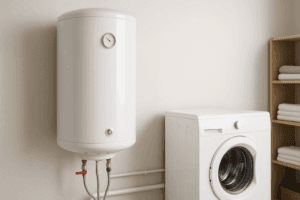
When sediment buildup accumulates in your water heater, the unit has to work twice as hard to heat the water through that layer of rock. This doesn’t just spike your energy bill; it damages the tank, leading to leaks and premature failure. If your water heater is rumbling or popping, that is the sound of sediment cooking.
Flushing your water heater annually is a maintenance task that pays for itself. It keeps the heating elements clear and maintains efficiency.
Furthermore, if you have a water softener (and you probably should), make sure it’s running efficiently. Old units can regenerate too often, flushing hundreds of gallons of water away unnecessarily. Upgrading to a demand-initiated water softener means the system only regenerates when you actually use water, rather than on a set timer.
Quick fixes that actually work
You might be thinking, “Do I need to rip out my plumbing to save money?” No. Absolutely not. Some of the best changes are inexpensive retrofits.
Start with faucet aerators. These are little mesh screens that screw onto the tip of your faucet. They mix air with the water stream, maintaining high pressure while reducing the actual volume of water flowing through. They cost a few dollars and can save thousands of gallons.
Next, look at your showerhead. If your showerhead was installed before 1992, it’s probably pumping out 5.5 gallons per minute (GPM). That is a lot of hot water. Switching to a WaterSense labeled fixture can drop that to 2.0 GPM or less.
And don’t worry about weak pressure. The technology has improved drastically. You can still get a powerful, satisfying shower without draining the local reservoir. It’s all about velocity and air mixture, not just volume.
It’s the little things, honestly
Sometimes, the hardware isn’t the problem. Sometimes, it’s us. Changing habits is tough, I get it. We are creatures of routine. But small adjustments in behavior are free and have immediate results.
For instance, the dishwasher. It is actually more water-efficient to use the dishwasher than to wash dishes by hand—but only if you run full loads. Running a half-empty machine is just throwing money away. The same goes for the washing machine. Adjust the water level setting to match the load size, or wait until the basket is full.
Here is another one: turning off the tap while brushing your teeth. It sounds like something your mom nagged you about, but she was right. Leaving the water running while you brush wastes four gallons every time. Do that twice a day, and you’re looking at nearly 3,000 gallons a year just for clean teeth.
What about the pressure?
High water pressure feels great in the shower, but it puts immense stress on your pipes. In Gilbert, municipal water pressure can fluctuate. If the pressure entering your home is too high (above 80 psi), it increases the risk of pipe bursts and wears out appliance seals faster.
It also means that every time you open a tap, more water comes out than you actually need. Installing a pressure reducing valve (PRV) acts like a traffic cop for your water line. It regulates the flow to a safe, efficient level. This protects your plumbing investment and lowers your bill simultaneously. It’s a win-win.
If you hear banging pipes (known as water hammer) when you turn off a faucet or when the washer changes cycles, high pressure might be the culprit. Ignoring this can lead to catastrophic leaks behind your walls, which is a bill nobody wants to pay.
Taking control of your utility costs
Reducing your water bill isn’t about sacrificing comfort or letting your lawn turn into dust. It is about being smarter with a precious resource. Whether it’s fixing that annoying toilet flapper, upgrading to a smart irrigation timer, or just being mindful of the tap, every drop adds up.
It helps to have a professional eye take a look, though. Sometimes the biggest leaks are the ones you can’t see, tucked away under the slab or deep in the walls. We know the specific plumbing challenges Gilbert homes face, from the aggressive hard water to the summer heat stress on pipes.
If you suspect you have a leak, or if you just want to optimize your home for better efficiency, Gilbert Plumbing Company is here to help. We can perform a comprehensive audit of your plumbing system and get your water bill back to a number that makes sense.
Don’t let your money wash away.