There is nothing quite like the sheer, unadulterated panic of watching the water level in your toilet bowl inch perilously close to the rim. If you live right here in Gilbert, AZ, you already deal with enough heat and hard water headaches without adding a flooded bathroom floor to the mix. Let me explain how you can stop the nightmare right now and get things flowing again quickly.
First Things First: Stop the Flood
Honestly, before you even think about grabbing a tool, we need to stop that rising water. Reach down behind the toilet, close to the wall, and turn that little oval-shaped shutoff valve clockwise. If that valve is stuck—which happens constantly with our notoriously hard Gilbert water scaling up the metal—take off the ceramic tank lid right away. Push the rubber flapper down over the drain hole at the very bottom of the tank.
That immediately stops the water from rushing into the bowl. You know what? A lot of folks absolutely freeze up when the water starts climbing, but just remembering this one simple trick saves your bath mats from total ruin. Once the water is stable, you can take a deep breath and properly assess the situation without feeling rushed.
Not All Plungers Are Created Equal
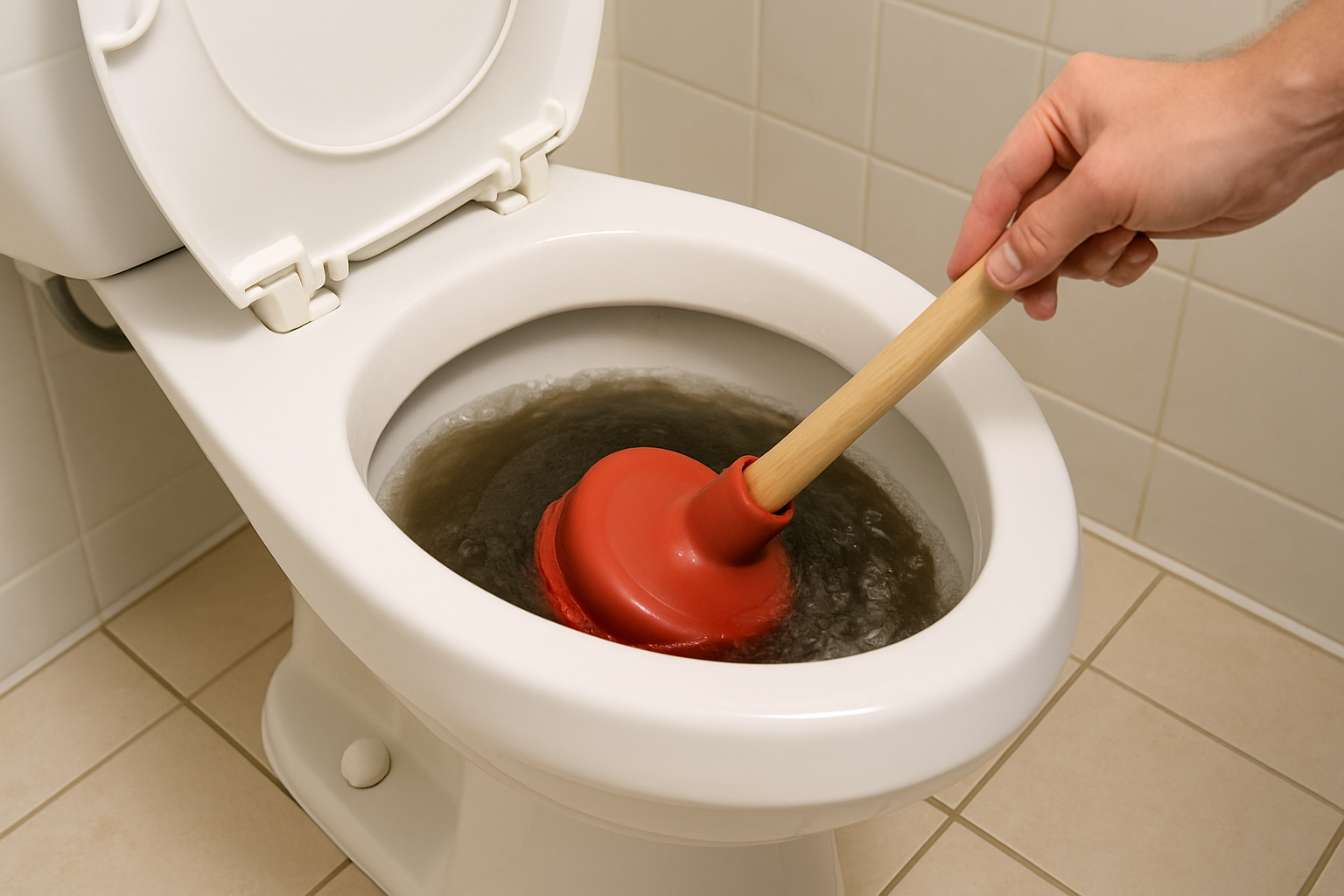
Here’s the thing. Most people have the completely wrong plunger sitting next to their toilet. That standard red rubber cup glued to a wooden stick? That is actually a sink plunger, and it is practically useless for toilets. What you actually need for a bathroom clog is a flange plunger.
This specific type has an extra sleeve of rubber protruding from the bottom that fits snugly into the toilet drain hole. A good quality Korky beehive plunger, for instance, will create the perfect vacuum seal. Let me explain the mechanics of how to use it right, because technique matters just as much as the tool.
You want to make sure there is enough water in the bowl to completely cover the plunger head. If the bowl is empty, grab a bucket and add a little tap water. Place the plunger into the drain, push down gently to force the trapped air out, and then pull up sharply. The real magic happens on the pull, not the push. You are trying to use suction to dislodge the mass. Give it a few vigorous pumps. If you suddenly hear that glorious gurgling sound of water draining away, you win.
The Pantry Raid: Hot Water and Dish Soap
What if you don’t own a flange plunger? Or what if your current plunging efforts are just not cutting it? Look inside your kitchen pantry. Liquid dish soap is a fantastic, slippery surfactant. It naturally breaks down organic waste and acts as a heavy lubricant for whatever is wedged in the trapway—that curved, S-shaped channel hidden inside the porcelain.
Here is exactly how to execute this DIY method safely:
- Squirt a generous amount of liquid dish soap directly into the bowl. Honestly, about half a cup should do the trick perfectly.
- Let it sit for a good 15 to 20 minutes. You want the heavy soap to seep deeply down into the water and coat the clog entirely.
- Heat up some water on your kitchen stove. This is incredibly crucial: do not use boiling water. Boiling water can literally crack cold porcelain, and then you are looking at a full toilet replacement instead of a simple clog. You just want it hot, like a fresh cup of tea.
- Pour the hot water slowly into the bowl from about waist high. The physical force of the falling water combined with the hot soap often clears the blockage instantly.
The Danger of Chemical Drain Cleaners
At this stage, you might be tempted to grab a jug of harsh liquid drain cleaner from under the bathroom sink. Don’t do it. This feels like a mild contradiction, right? You want the pipe clear, and the plastic bottle promises a brilliantly clear pipe.
But those caustic chemicals generate intense heat through a volatile chemical reaction. Sitting inside a porcelain bowl, that heat can easily warp your internal plumbing parts or damage the wax ring at the base of the toilet itself. Furthermore, if the chemical fails to clear the blockage, you are now left with a bowl full of highly toxic, skin-burning water that you still have to deal with. Chemical drain cleaners usually just cause far more expensive headaches than they solve.
Stepping Up to the Closet Auger
Sometimes, soap and plunging just won’t work. The clog might be a kid’s plastic toy, a massive wad of thick paper, or something else entirely. By the way, those heavily marketed flushable wipes are absolutely not flushable. Local plumbers despise them because they do not break down in water.
When facing a solid obstruction, you need to bring out the heavy artillery: a closet auger. Plumbers traditionally call a toilet a water closet, hence the strange industry name. A closet auger is basically a short, manual plumbing snake equipped with a protective rubber sleeve so you don’t scratch up the visible porcelain at the bottom of your toilet bowl.
You feed the flexible metal cable down into the drain and crank the handle clockwise. A sturdy brand like RIDGID makes great hand augers that you can easily pick up at any local hardware store. You just crank until you feel heavy resistance, then pull the blockage back out or push it entirely through into the main line.
| Unclogging Method | Best Used For | Effort Level |
|---|---|---|
| Flange Plunger | Standard organic clogs and paper | Low to Medium |
| Soap & Hot Water | Mild blockages, when lacking tools | Low |
| Closet Auger | Hard objects, wipes, stubborn clogs | Medium to High |
The Red Flags of a Bigger Plumbing Problem
Now, you might successfully unclog your toilet fast, but then it frustratingly comes right back the very next day. This is where a localized toilet issue actually points to a completely different, hidden problem. The toilet itself might be totally fine.
If you flush the toilet and dirty water backs up into your shower floor, or if you run your bathroom sink and the toilet starts bubbling like a witch’s cauldron, you have a much larger problem on your hands. That bubbling sound means trapped air is desperately trying to escape your plumbing system because your main Sewer Line is obstructed.
Tree roots from those beautiful mature Palo Verde trees we have around the East Valley love to sneak into older sewer lines looking for moisture. When the main line is severely blocked, no amount of plunging in the bathroom will permanently fix the issue. You need professional hydro-jetting or a specialized camera inspection to locate the root mass and blast it away.
Let Gilbert Plumbing Company Handle the Mess
We get it. Nobody actually wants to spend their precious Saturday afternoon wrestling with a stubborn, dirty bathroom drain. It is incredibly messy, it is inherently stressful, and sometimes, it just doesn’t work out no matter what clever DIY trick you try.
If you have tried the flange plunger, poured the hot soap, and cranked the auger to no avail, it is time to throw in the towel. Let us take over from here. At Gilbert Plumbing Company, we have truly seen it all. From toy dinosaurs lodged deeply in the trapway to massive tree root invasions blocking the main sewer line, our local plumbing experts know exactly how to diagnose the issue and fix it cleanly.
We pride ourselves on taking the sheer stress out of home maintenance for our Gilbert neighbors. Stop dealing with the gross mess yourself and let a professional restore your peace of mind.
Give us a call at 480-535-0728 or Request a Free Quote today, and we will get your home back to normal fast.