Let’s face it, nobody wakes up on a Saturday morning in Gilbert excited to think about what’s happening in the pipes buried under their yard. It’s one of those “out of sight, out of mind” things that we all happily ignore right up until the moment it demands our absolute, panicked attention. But honestly, waiting for a catastrophe is the most expensive way to handle homeownership.
Something Smells, and It Isn’t the Dog
You know that specific, heavy smell of rotten eggs? The one that hits you when you walk in the door and makes you wonder if you left the trash out too long? If you’ve scrubbed the kitchen, taken out the garbage, and blamed the dog, but the scent lingers, you’ve likely got a sewer gas leak.
Here’s the thing: your plumbing system is designed to be airtight everywhere except the vent stacks on your roof. That’s just Plumbing 101. Inside your drains, you have these U-shaped bends called P-traps. Under normal circumstances, those traps hold a little bit of water that acts as a barrier, stopping nasty gases from crawling back up into your bathroom.
But if your main Sewer Line is cracked or collapsed, the pressure changes. It can siphon that water right out of the traps, leaving you with an open doorway for sewer gas. It’s not just gross; it’s actually a health hazard. In our dry Arizona heat, those smells can permeate drywall and carpet faster than you’d think. If you smell it, don’t just light a candle and hope it passes. It won’t.
The Yard Is suspiciously Green
We live in the desert. Unless you are spending a fortune on irrigation or you’ve got artificial turf, having a patch of grass that looks lush, vibrant, and incredibly green is… weird.
I know, it sounds counterintuitive to complain about nice grass. But if you have a specific patch of your yard that is growing faster and greener than the rest, it’s often a sign that your sewer line is leaking underground. Sewage acts as a brutally effective fertilizer.
While your grass might be enjoying the extra nutrients and moisture, the soil underneath is getting soggy. This can lead to sinkholes or, even worse, shifting the ground around your home’s foundation. Gilbert soil already has a lot of clay, which expands and contracts. Add a constant leak to that mix, and you’re looking at structural headaches down the road. So, if one spot in the yard looks like a fairway at a golf course while the rest looks like typical desert landscaping, you need to call a pro.
Slow Drains Are Everywhere
One slow sink is an annoyance; it’s usually just a glob of toothpaste and hair caught in the trap. You can usually fix that with a plastic snake or a plunger. But when the toilet, the shower, and the kitchen sink are all draining like molasses at the same time? That is a massive red flag.
This usually points to a blockage or a break in the main lateral line—that’s the big pipe causing all the trouble, connecting your house to the city sewer.
Think of your plumbing like a tree. The fixtures are the twigs, the branch lines are the branches, and the sewer line is the trunk. If the trunk is choked off, nothing flows.
You might notice that running the washing machine causes the toilet to gurgle, or flushing the toilet makes water back up into the shower. We call this “water migration.” Since the wastewater has nowhere to go, it seeks the lowest point of entry, which is usually your tub or shower drain. If you’re seeing this happen, put down the chemical drain cleaner. Seriously, don’t use it. It can eat away at old cast iron pipes and make a bad situation ten times worse.
Listen to the Gurgle
Your house shouldn’t talk to you. If it does, you should probably listen.
When you have a clog or a collapse in the sewer line, air gets trapped in the system. As water tries to push past the blockage, that air has to escape somewhere, and it bubbles back up through your water seals. This creates a distinct gurgling or bubbling sound.
You might hear it in the toilet bowl when the dishwasher drains, or hear a “glug-glug” sound from the sink when you’re taking a shower. It’s a sign of negative pressure.
It’s easy to dismiss a noise. We get used to the creaks and groans of a house settling. But plumbing noises are different. They are the early warning system before the backup happens. And trust me, you want to catch this at the “gurgle” stage, not the “sewage in the hallway” stage.
Pests Are Making Themselves at Home
This is the one that really freaks people out. You might be the cleanest person in Gilbert, keeping your kitchen spotless and your trash sealed tight. Yet, you suddenly have a rat problem or an influx of sewer flies (those fuzzy little moth-looking things).
Rats and insects live in the sewers. I know, it’s not a pleasant thought, but it’s reality. If there is a crack or separation in your sewer line, it’s like hanging out a “Vacancy” sign for pests. They can squeeze through incredibly small cracks in the pipe and navigate their way into your walls or basement.
If pest control can’t figure out where they are getting in, the answer is often under your feet. A camera inspection of the sewer line can sometimes reveal a rodent superhighway that no amount of traps will fix until the pipe is replaced.
Why Do These Pipes Fail Anyway?
You might be wondering, “My house isn’t even that old, why is this happening?” It’s a valid question. In Gilbert, we see a mix of materials depending on when your home was built.
- Clay Pipes: Common in older homes. They are heavy and durable, but they are brittle. Tree roots love them.
- Cast Iron: Used for decades. It eventually rusts from the inside out, creating a jagged channel that catches toilet paper until it blocks completely. Or the bottom just rusts out (channeling).
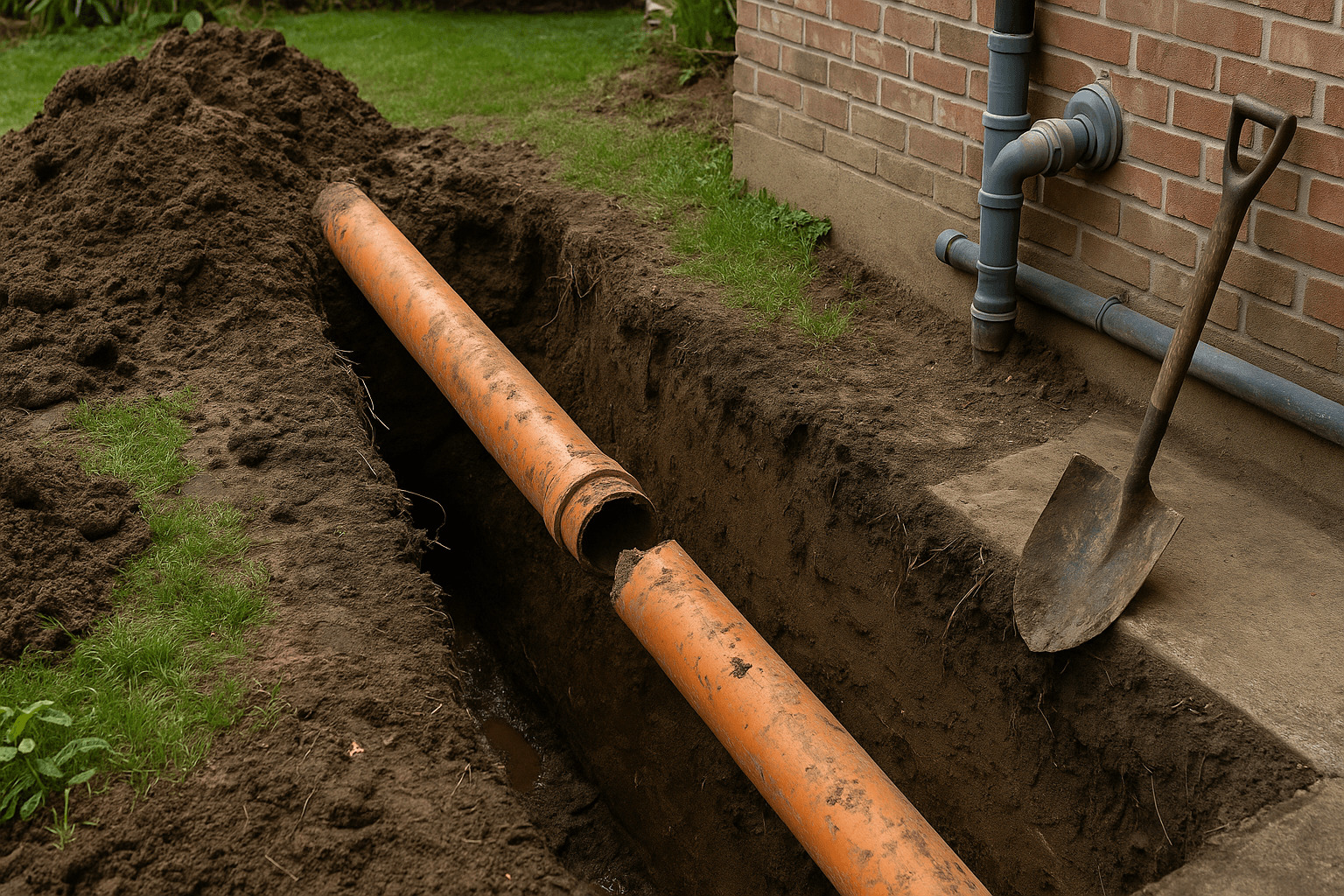
- Orangeburg: Essentially tar paper. If you have this, you’re on borrowed time. It collapses if you look at it wrong.
- PVC/ABS: Modern plastic. It’s great, but it can still crack from ground shifting or poor installation.
Also, let’s talk about tree roots. They are the nemesis of plumbing. Roots can sense the moisture inside a pipe from surprisingly far away. They grow toward the pipe, find a tiny crack or joint, and work their way in. Once inside, they drink the water and grow huge, shattering the pipe in the process.
Repair vs. Replacement: What to Expect
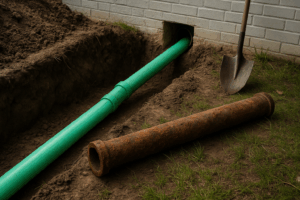
Hearing “sewer line replacement” makes most homeowners clutch their wallets. I get it. It sounds massive. And years ago, it meant bringing in a backhoe and tearing up your entire front yard, driveway, and prize-winning rose bushes.
But technology has come a long way. While traditional excavation is sometimes necessary, we often use trenchless sewer repair methods now.
Here is a quick breakdown of how they differ:
| Feature | Traditional Excavation | Trenchless (Pipe Bursting/Lining) |
|---|---|---|
| Invasiveness | High. We dig a trench the length of the pipe. | Low. Only 1 or 2 small access holes needed. |
| Landscape Impact | Significant. Lawn/driveway repairs likely needed. | Minimal. Your yard stays mostly intact. |
| Time | Can take several days. | Often completed in one day. |
| Durability | Brand new pipe installed. | New pipe is as strong or stronger than the old one. |
We don’t always have to dig up the whole world to fix a pipe. Sometimes we can pull a new pipe through the old one, bursting the damaged pipe outward as we go. It’s pretty slick.
Don’t Wait for the Flood
Here is the bottom line: your plumbing system is the vascular system of your home. When it starts showing symptoms, it’s asking for help. Ignoring a gurgle or a slow drain is a gamble where the house always wins—and by wins, I mean it floods your bathroom with wastewater.
If you’ve noticed any of these signs—the smell, the wet spots in the yard, the gurgling toilets—it is time to get eyes on the problem. We use high-definition cameras to go down the line and see exactly what is happening. No guessing games. Just clear answers.
At Gilbert Plumbing Company, we’ve seen it all. We know the soil, we know the local codes, and we know how to get your water running smoothly again without turning your life upside down.
Don’t let a small leak turn into a structural nightmare. Let’s get it fixed.