Honestly, there is nothing quite like that sinking feeling when you step in a mysterious puddle wearing fresh socks. Living in Gilbert, AZ, we already deal with enough stress from the brutal summer heat without worrying if a hidden pipe is quietly turning our walls into a swamp. Let’s talk about the sneaky reality of household leaks and how we actually track them down before they ruin your week.
Why That “Minor” Drip is Actually a Massive Headache
Here’s the thing. A lot of folks hear a faint dripping sound and think they will just fix it over the weekend. But weekends turn into months, and suddenly, you are staring at a blistered drywall situation. It is frustrating, isn’t it?
Water is stubbornly persistent. If it wants to get out of a pipe, it will absolutely find a way. Out here in the East Valley, our naturally hard water does not do our plumbing any favors, either. Those heavy mineral deposits build up inside the lines, gradually wear down your pipes, and boom—you have a tiny pinhole leak spraying behind your cabinets.
You know what? I always tell people that the water itself is not even the scariest part of the equation. It is what the water brings with it that causes the real nightmare. Mold absolutely loves the damp, dark spaces behind your baseboards and under your sink. And honestly, nobody wants to breathe that stuff in.
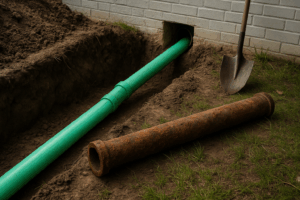
Plus, have you looked closely at your utility bill lately? A constantly running toilet or a hidden underground Slab Leak can add hundreds of dollars to your monthly expenses over time. It just does not make financial sense to ignore the problem.
Are You Sleeping Right Above a Leak?
Sometimes, plumbing problems scream at you. A pipe bursts loudly in the laundry room, water gushes everywhere, and it is pretty obvious what needs to happen next. But other times? They are incredibly quiet.
Let me explain. You might have a severe leak happening right under your feet right now, and you wouldn’t even know it. But if you pay close attention, your house usually leaves a trail of subtle clues.
- A suddenly skyrocketing water bill: If your family’s daily water usage has not changed but the bill doubled, something is definitely wrong.
- Warm spots on your floor: This is a classic sign of a hot water line leaking under your foundation. If your tile feels randomly cozy, do not just enjoy the warmth—investigate it.
- Musty odors that won’t go away: You can clean and scrub all day long, but if a specific room constantly smells like an old basement, moisture is hiding somewhere.
- Cracks in your foundation or walls: Water eroding the soil under your home can literally cause your house to shift and settle unevenly.
- The spinning water meter test: Turn off every faucet and appliance in your house. Go out to your water meter. If that little dial is still spinning, water is escaping somewhere.
It is funny, actually. People expect leaks to be loud, dramatic events. But mostly, they are just silent little drips slowly eating away at your home’s equity.
Peeking Behind the Drywall: The Real Techniques
Back in the day, finding a leak meant tearing up half your house. Plumbers would essentially just guess where the water was coming from and start swinging a sledgehammer at the drywall. It was messy, loud, and incredibly stressful for homeowners. Thankfully, we do not have to play guessing games anymore.
Today, the pros use some pretty fascinating technology to pinpoint exactly where the water is escaping. Best of all, we can usually do it without breaking a single tile or knocking a hole in your ceiling.
Acoustic Listening (The Plumber’s Stethoscope)
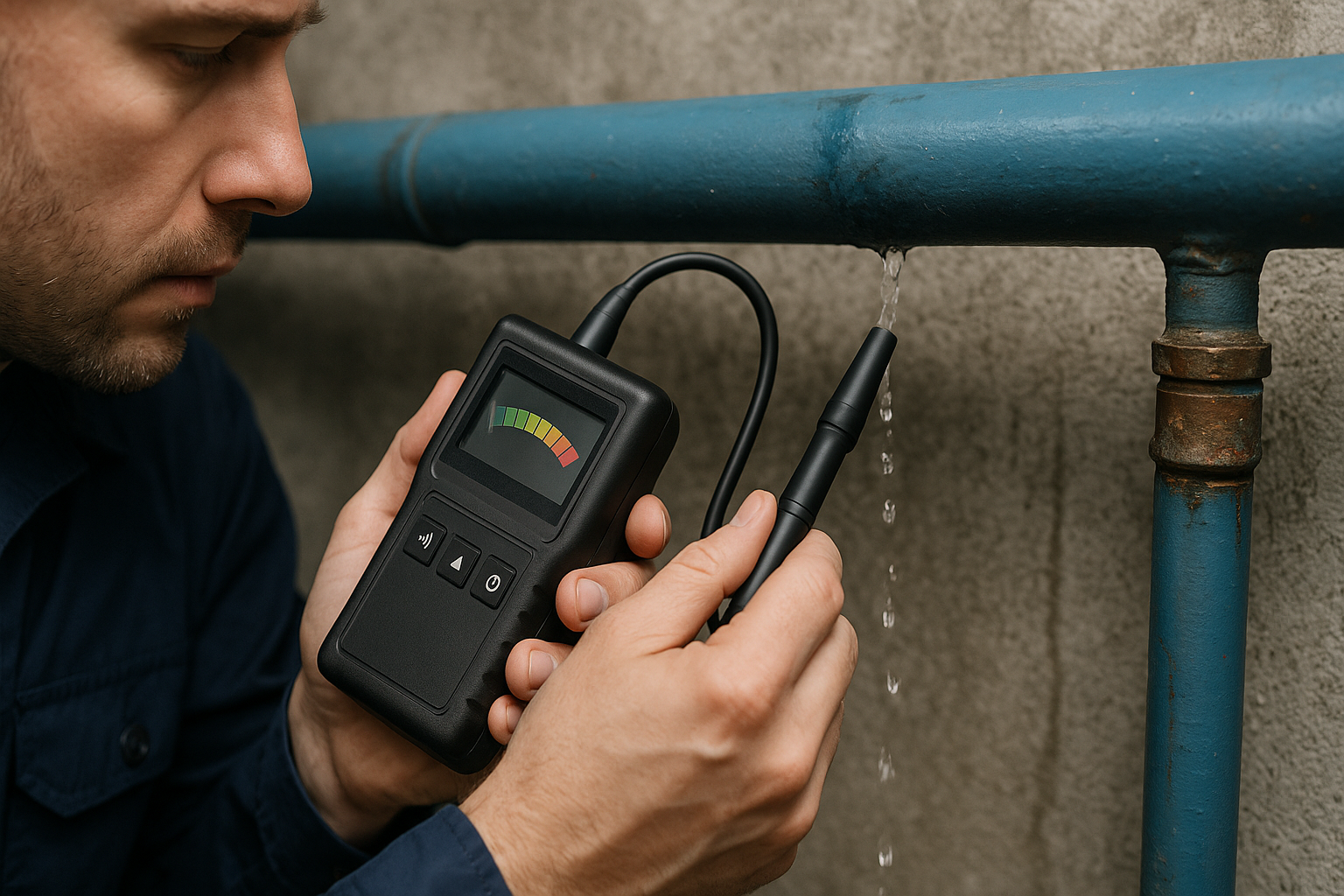
You have probably seen doctors use a stethoscope to listen to your heartbeat. Well, we use highly sensitive acoustic equipment to listen to your plumbing. Escaping water makes a specific hissing or whooshing sound, depending on the pressure inside the pipe. By sweeping these electronic ground microphones over your floors, we can isolate the exact location of the noise. It is surprisingly simple but insanely effective for pinpointing exactly where we need to dig.
Thermal Imaging (Seeing the Invisible)
Infrared cameras are basically a superpower. We use them to scan your walls and floors for temperature anomalies. Since leaking water usually changes the temperature of the surrounding building materials, a thermal camera will show a bright blue or red spot right where the issue is. This is especially helpful for those notorious Arizona slab leaks where the plumbing is buried deep in the thick concrete foundation of your house.
Tracer Gas Testing (When It Plays Hard to Get)
Occasionally, a leak is so incredibly small or buried so deep that it refuses to make a sound. That is when we bring out the tracer gas. We empty the water from the suspected pipe and fill it with a harmless, odorless mixture of nitrogen and hydrogen. Hydrogen molecules are tiny—so tiny they escape right through the leak and rise through the flooring. We then use a specialized gas sniffer device to detect exactly where the gas is coming up. It sounds like a gimmick out of a sci-fi movie, but it works flawlessly.
A Quick Breakdown of Detection Methods
I know that is a whole lot of technical jargon to throw at you at once. To make it a bit easier to digest, here is a quick look at how these three main methods stack up against each other:
| Technique | How It Actually Works | When We Use It Most |
|---|---|---|
| Acoustic Detection | Listens for the high-frequency sound of escaping water. | Pressurized water lines, under concrete slabs. |
| Thermal Imaging | Finds sudden temperature shifts inside walls or under floors. | Hot water leaks, roof moisture, hidden wall dampness. |
| Tracer Gas | Sniffs out harmless gas escaping from microscopic pipe holes. | Extremely deep leaks, outdoor yard lines, tiny pinholes. |
It really just depends on the situation. We might use just one method, or we might use a combination of all three just to be absolutely certain before we make any repairs.
Should You Try to Find It Yourself? Let’s Be Real
Look, I completely get the appeal of DIY. I really do. There are plenty of online video tutorials out there promising you can fix absolutely anything with some basic tools and a free afternoon. And if you have a leaky outdoor spigot or a running toilet, you might be able to handle that on your own. You just swap out a flapper or tighten a washer, and you are entirely good to go.
But chasing down hidden leaks? That is a whole different ballgame.
Without the right diagnostic tools, you might end up ripping out perfectly good drywall only to realize the water is actually traveling along a wooden joist from ten feet away. Water is tricky like that; it naturally takes the path of least resistance. It rarely drips straight down. Trying to chase a water stain through your living room ceiling is a very fast way to turn a minor repair into a major, expensive renovation project.
That is exactly why calling a professional plumber in Gilbert saves you time, money, and a whole lot of sanity. At Gilbert Plumbing Company, we bring the heavy-duty diagnostic gear so your house stays structurally intact. We figure out exactly where the problem is originating, and we fix it right the first time. No guessing. No unnecessary damage.
Let’s Stop That Leak in Its Tracks
Nobody ever plans for a plumbing emergency. They always seem to happen right before a major holiday, when family is visiting, or when you are already stressed about a million other things. But ignoring a suspected leak will not make it magically disappear; it will only make the eventual repair bill that much steeper.
You deserve to feel completely comfortable and relaxed in your own home, without the looming dread of hidden water damage hanging over your head. If you suspect something is off with your plumbing, trust your gut instinct. It is always far better to catch these things early before they turn into a full-blown crisis.
Ready to get things checked out by the experts? You do not have to figure this out alone. Give us a call at 480-535-0728 and let our team handle the heavy lifting. Or, if you prefer to handle things online right now, simply Request a Free Quote on our website. Let’s get your home back to being a stress-free, totally dry sanctuary.